Circular packaging · Healthcare
vital loop
Supporting life. Reducing waste.
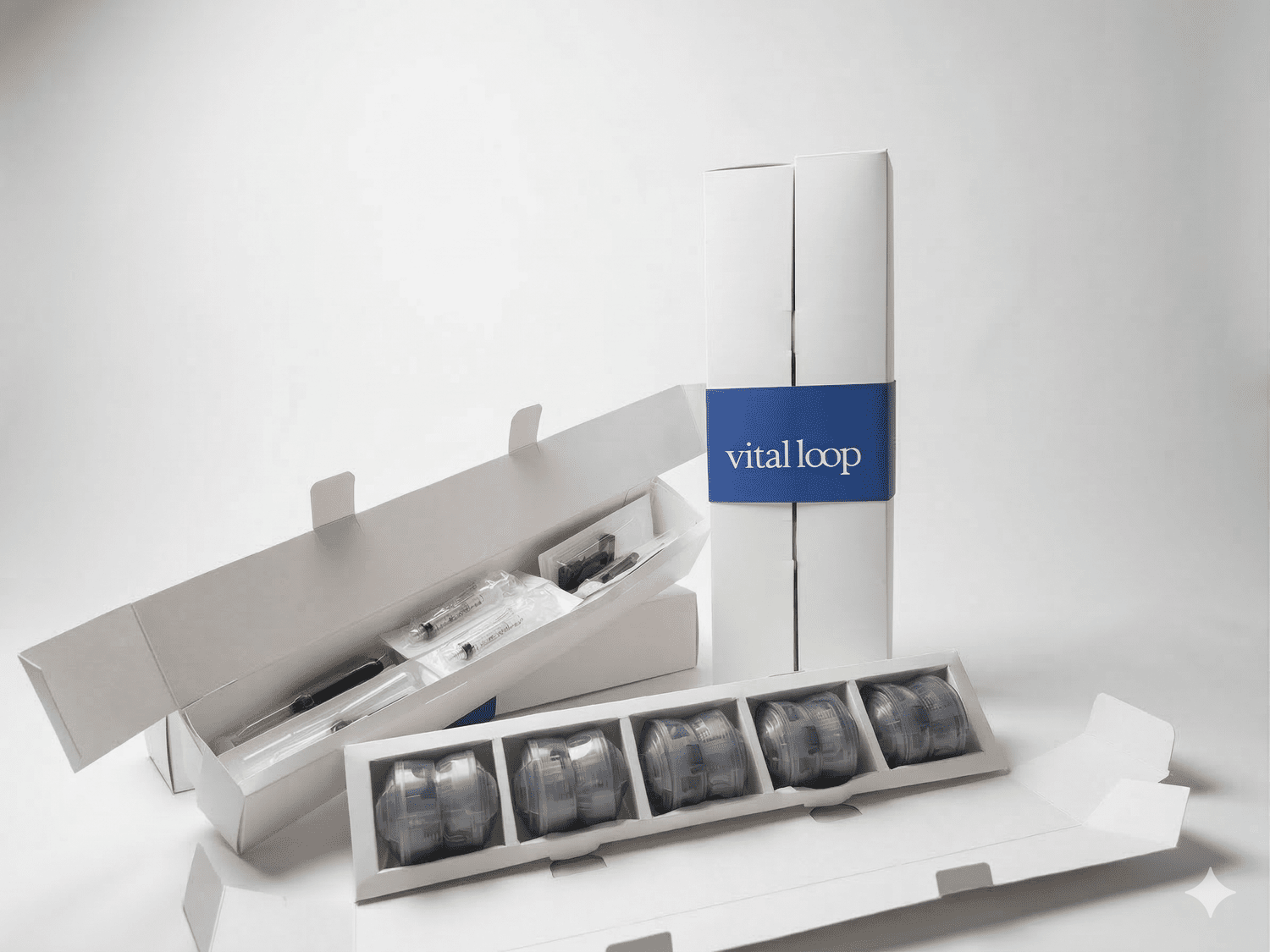
Vital Loop is a circular packaging system for insulin pump supplies. It's designed for people with Type 1 diabetes who are frustrated with managing their supplies, and for the planet that absorbs the waste. Unlike traditional pump suppliers, it keeps materials organized at home and lets users send their waste back, building circularity into production.
8
interviews with people living with T1D
140+
survey responses
88%
want a better way to store their supplies
45–70%
more sustainable than current packaging
01 · The challenge
Better technology, more waste
Advances in diabetes technology, especially insulin pumps, have greatly improved glycemic control, quality of life and health outcomes for people with Type 1 diabetes (Heinemann & Klonoff, 2022).
But as pump use grows, so does the medical waste: infusion sets, reservoirs, tubing, sensors, adhesives, batteries and single-use plastic packaging. It's made of non-biodegradable plastics and electronics that add to landfills, microplastic pollution and greenhouse gas emissions from production and disposal (Hossmann, Brandt & Heinemann, 2025).
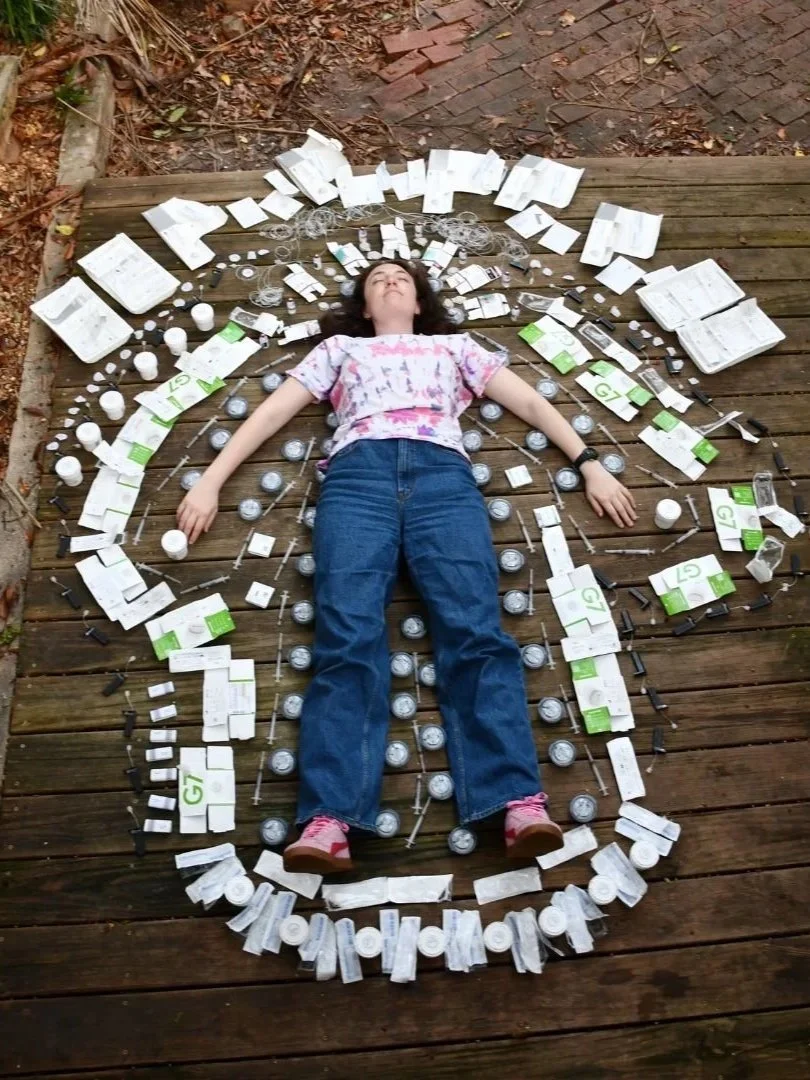
Three months of diabetes-related waste.
02 · Research
Looking at the system from every angle
As a systems thinker, I take on several roles during exploratory research. I analyzed packaging and manufacturing regulations, traced the product's design history, reviewed data on the scale of the problem and evaluated sustainability policies in practice.
What does the ordering process look like?
How are people storing their supplies?
How are the supplies disposed of?
What is the ideal experience?
Step 1 · Understand
Qualitative research to frame the problem, including interviews with eight people living with T1D.
Step 2 · Validate
A survey with over 140 responses measured the problem. Over 88% were interested in a new way to store and organize their supplies.
Step 3 · Affinitize
I sorted every data point into categories. Those categories defined the ideal experience before any design began.
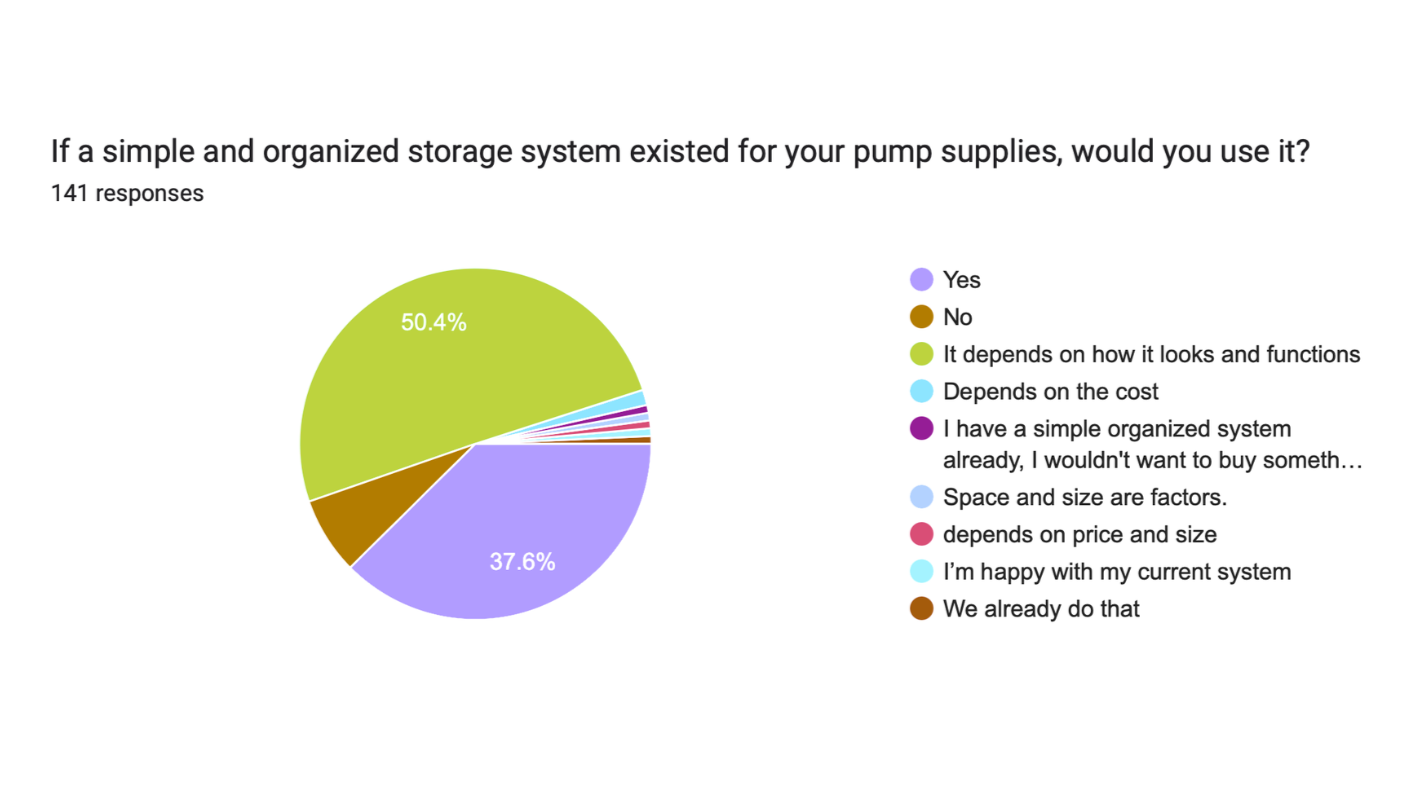
Survey results: interest in a new storage system.
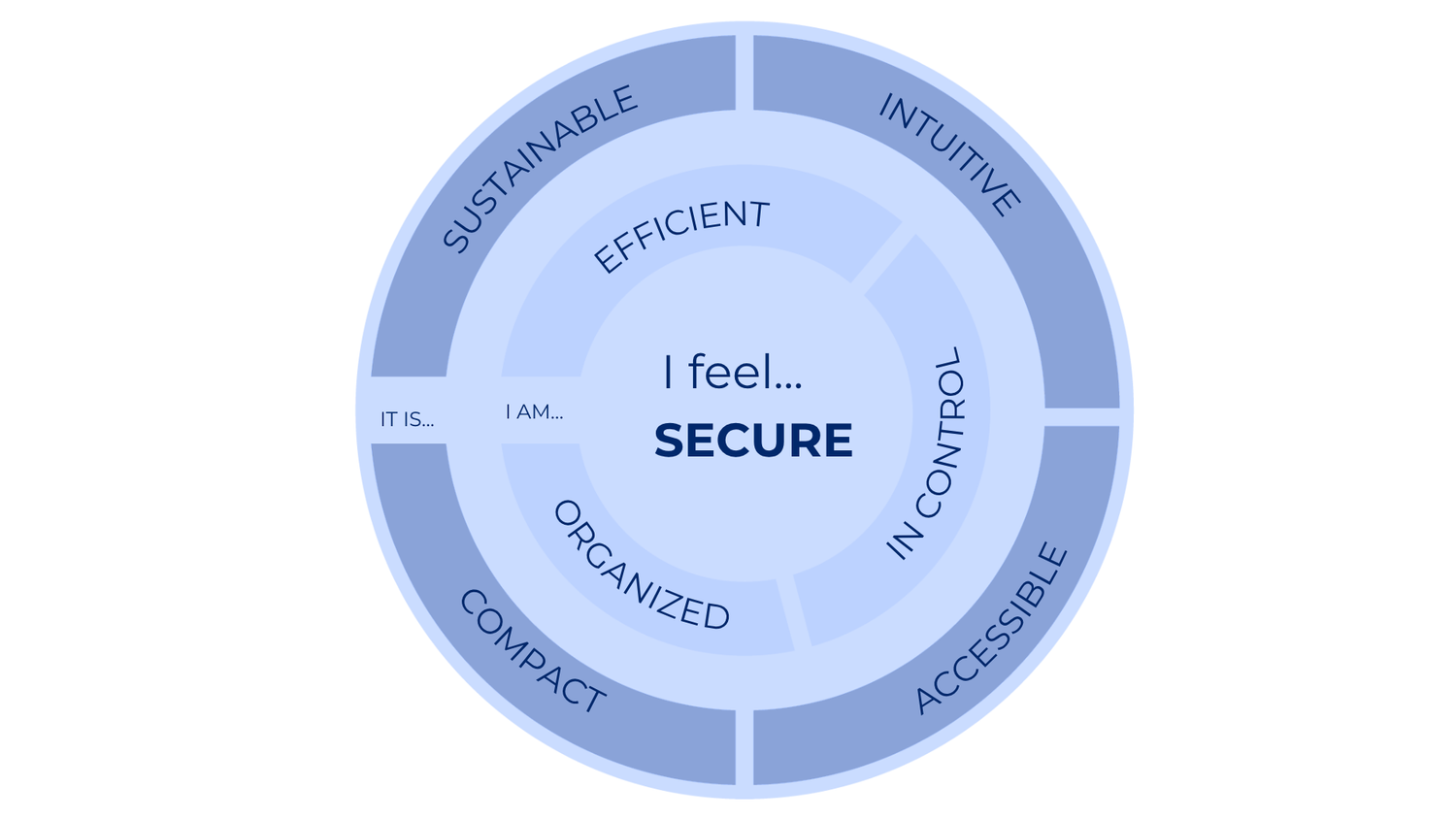
Affinitized data: the ideal experience.
03 · Design
Two goals guided every prototype
Be more sustainable than the current packaging.
Keep supplies organized and easy to reach.
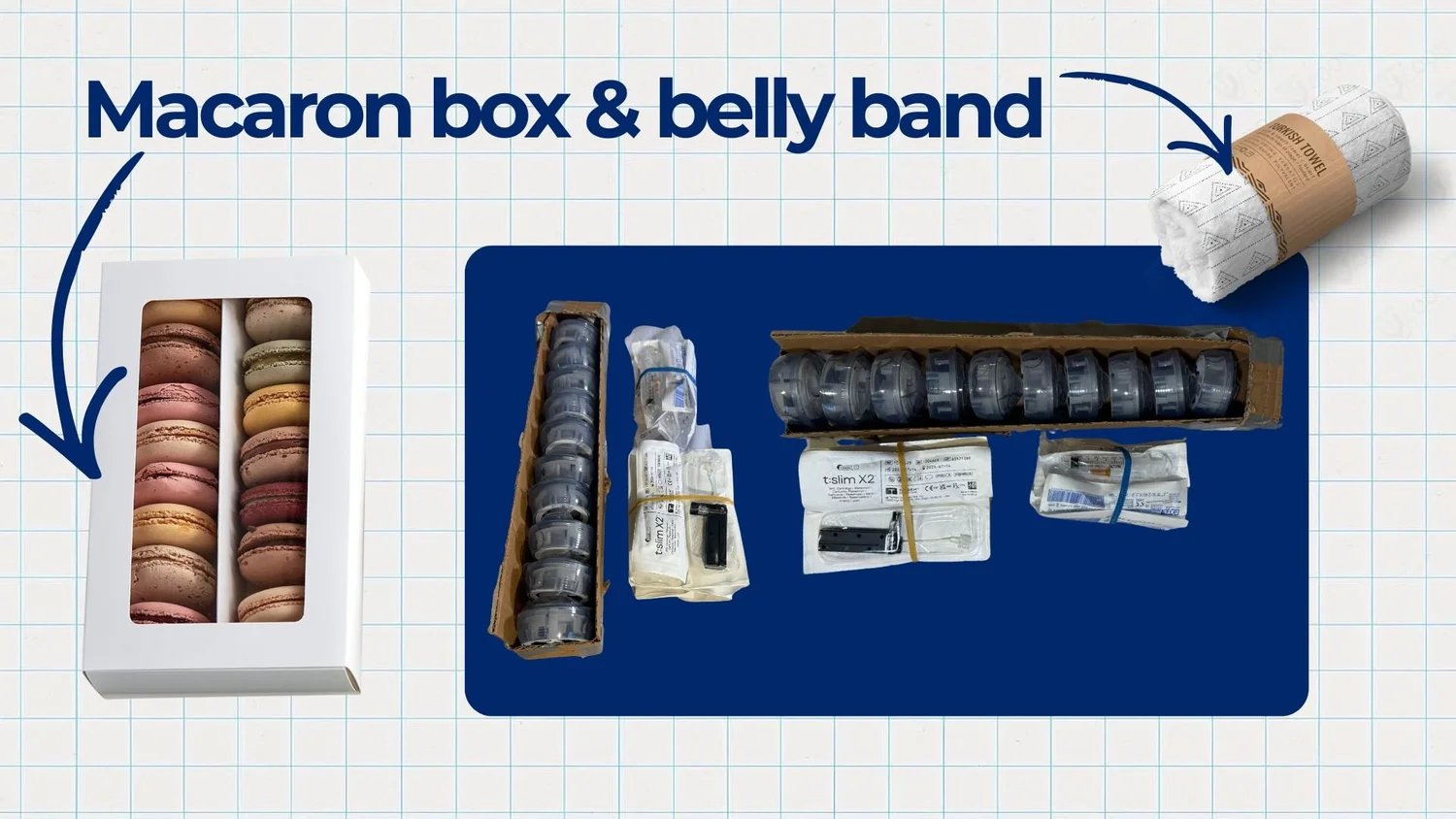
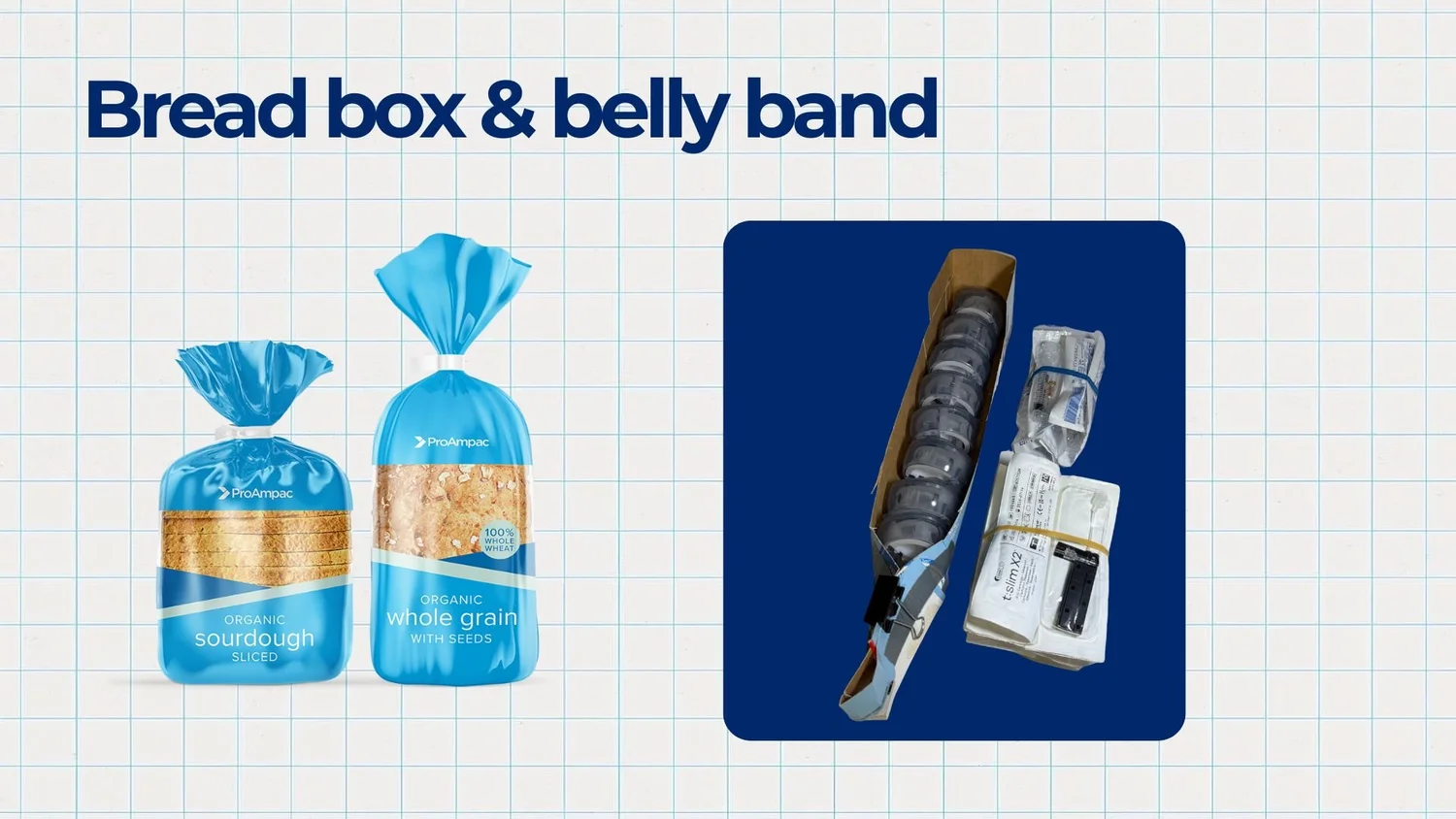
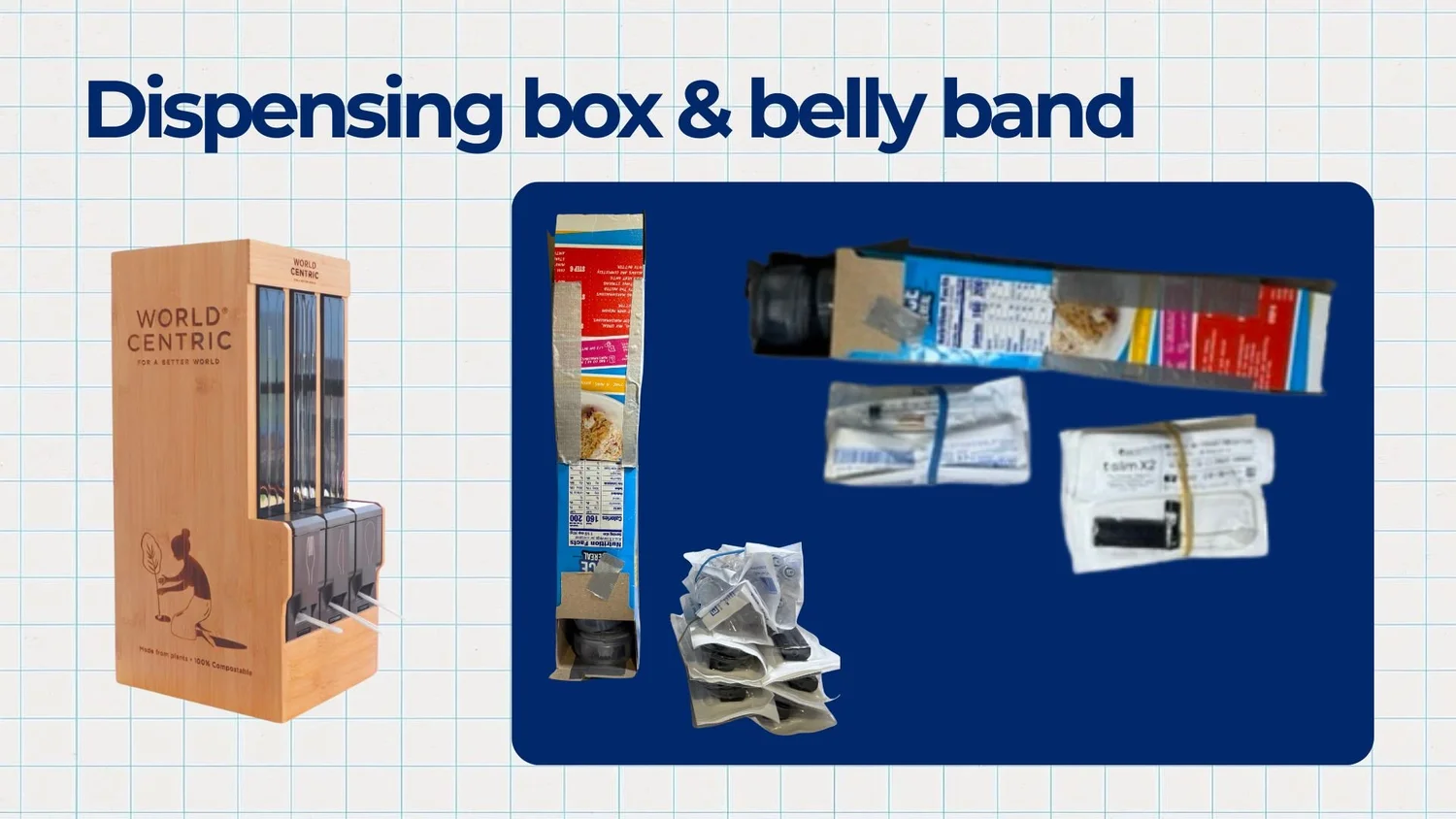
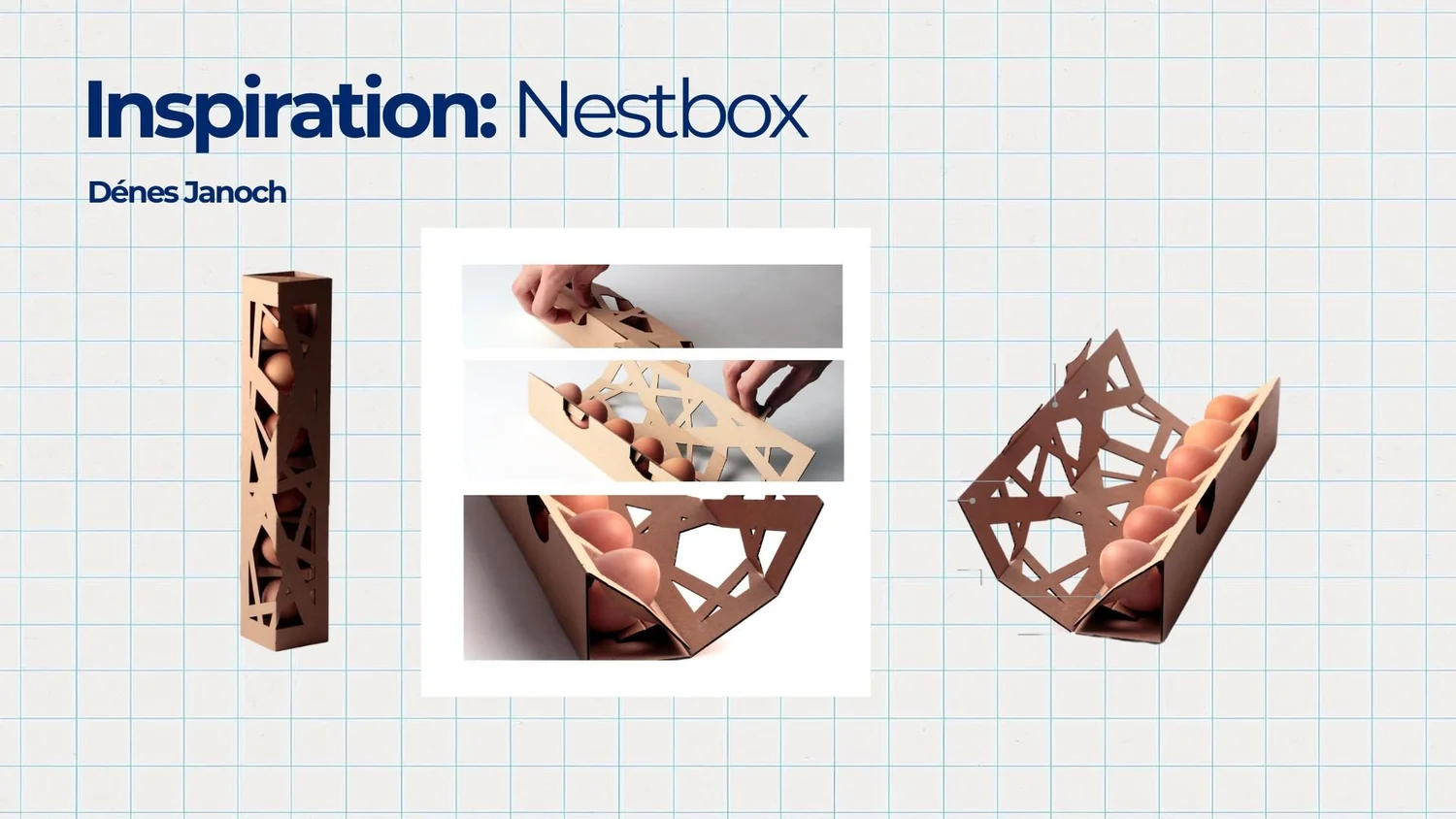
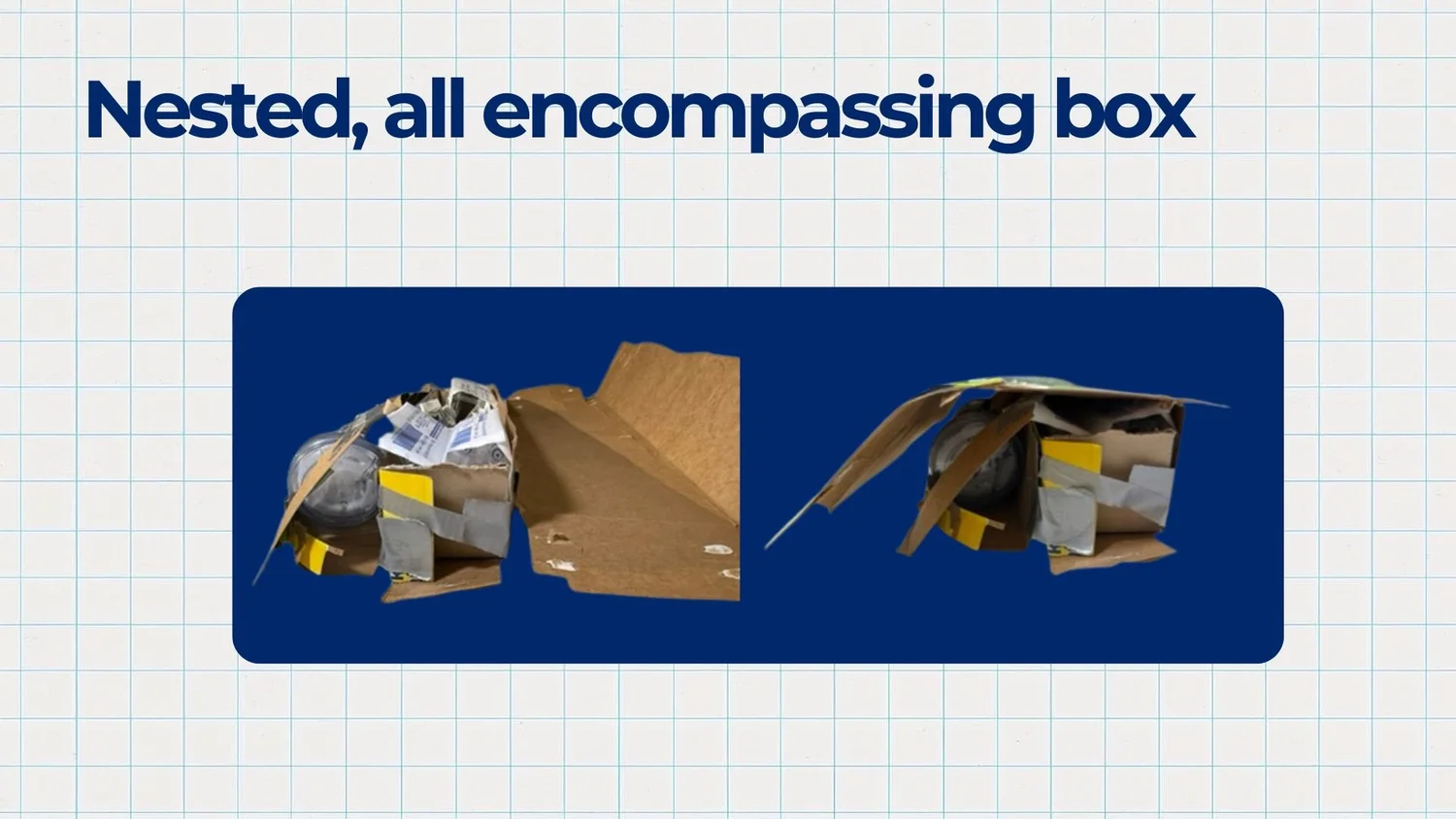
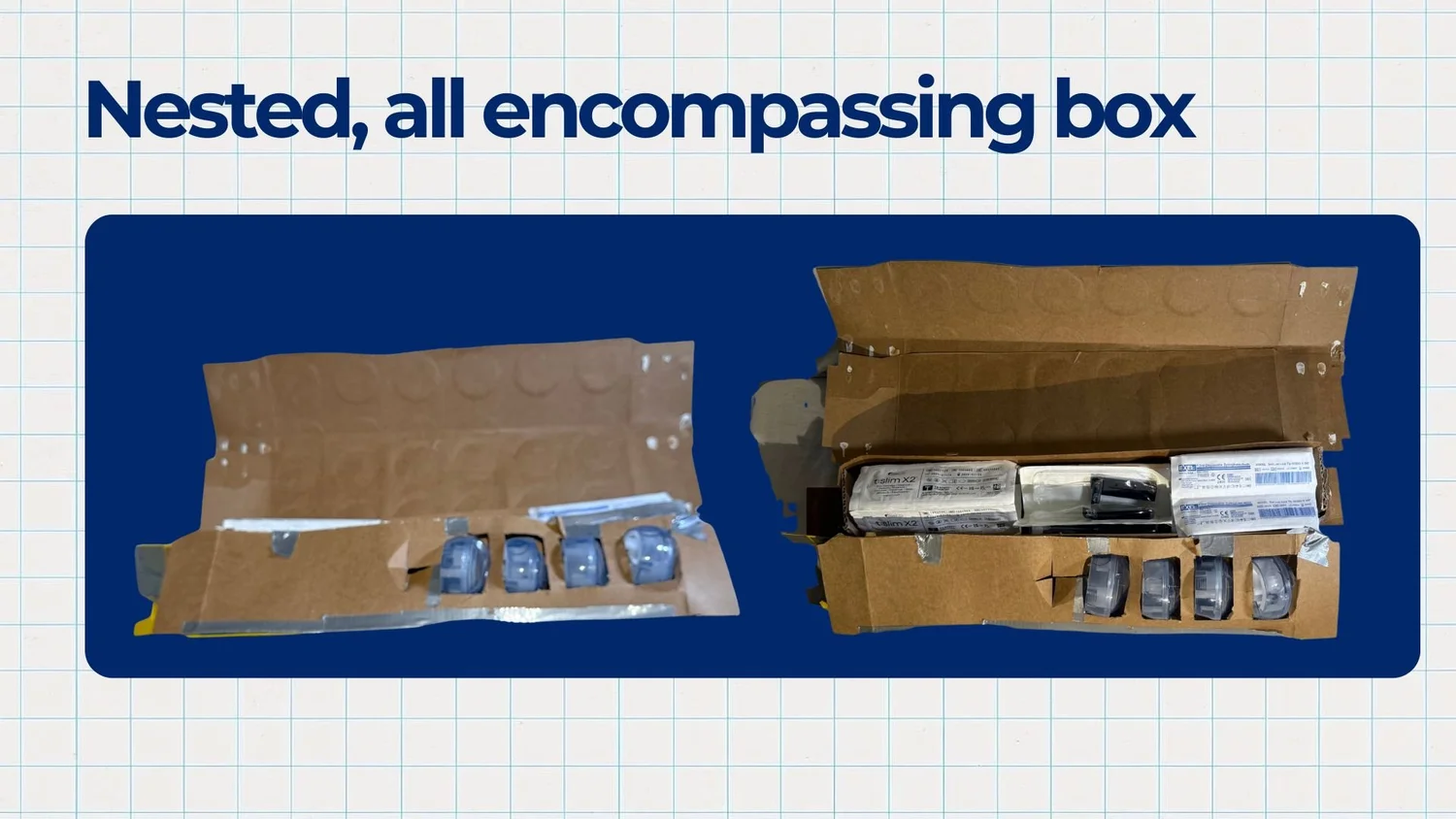
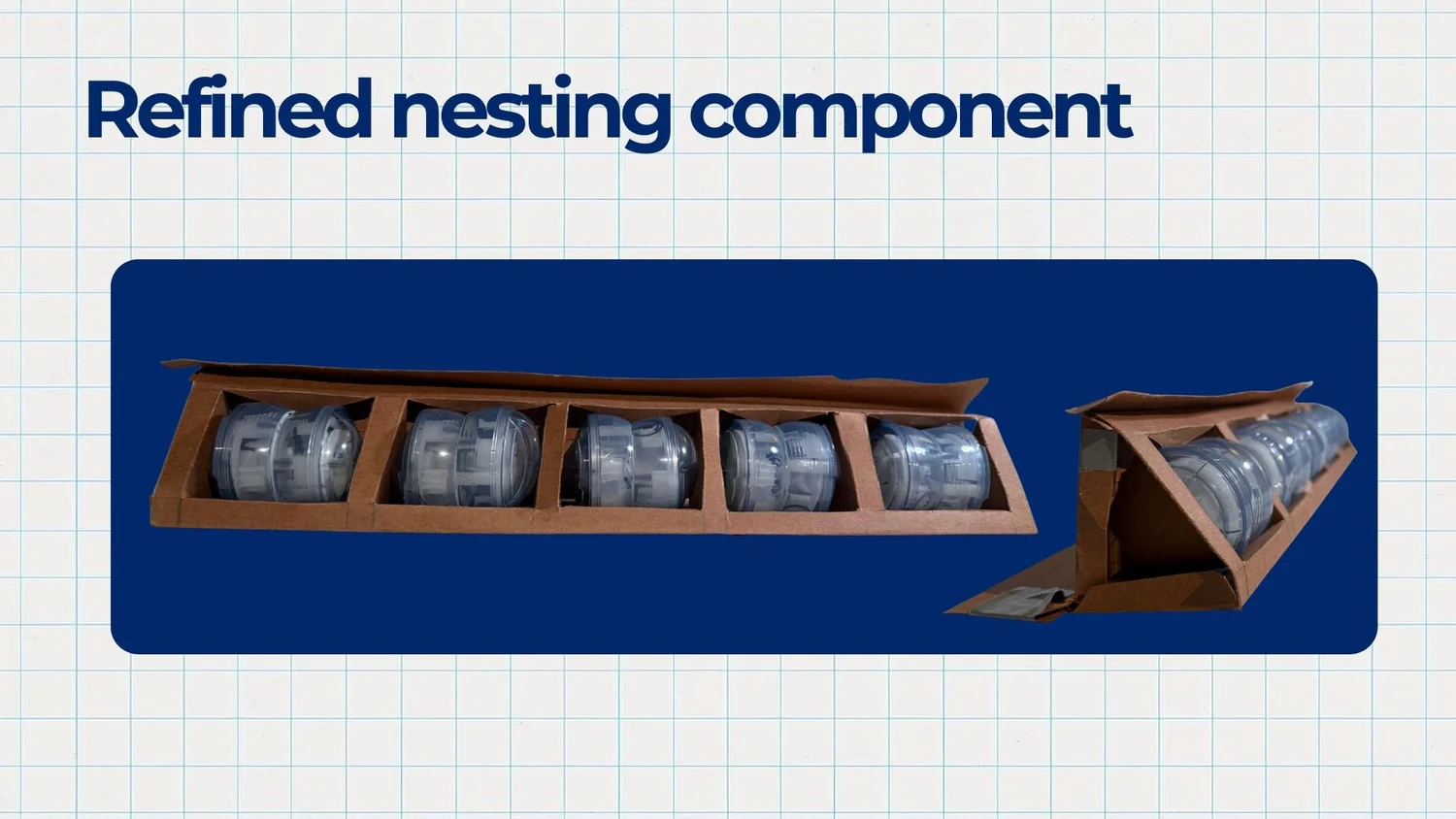
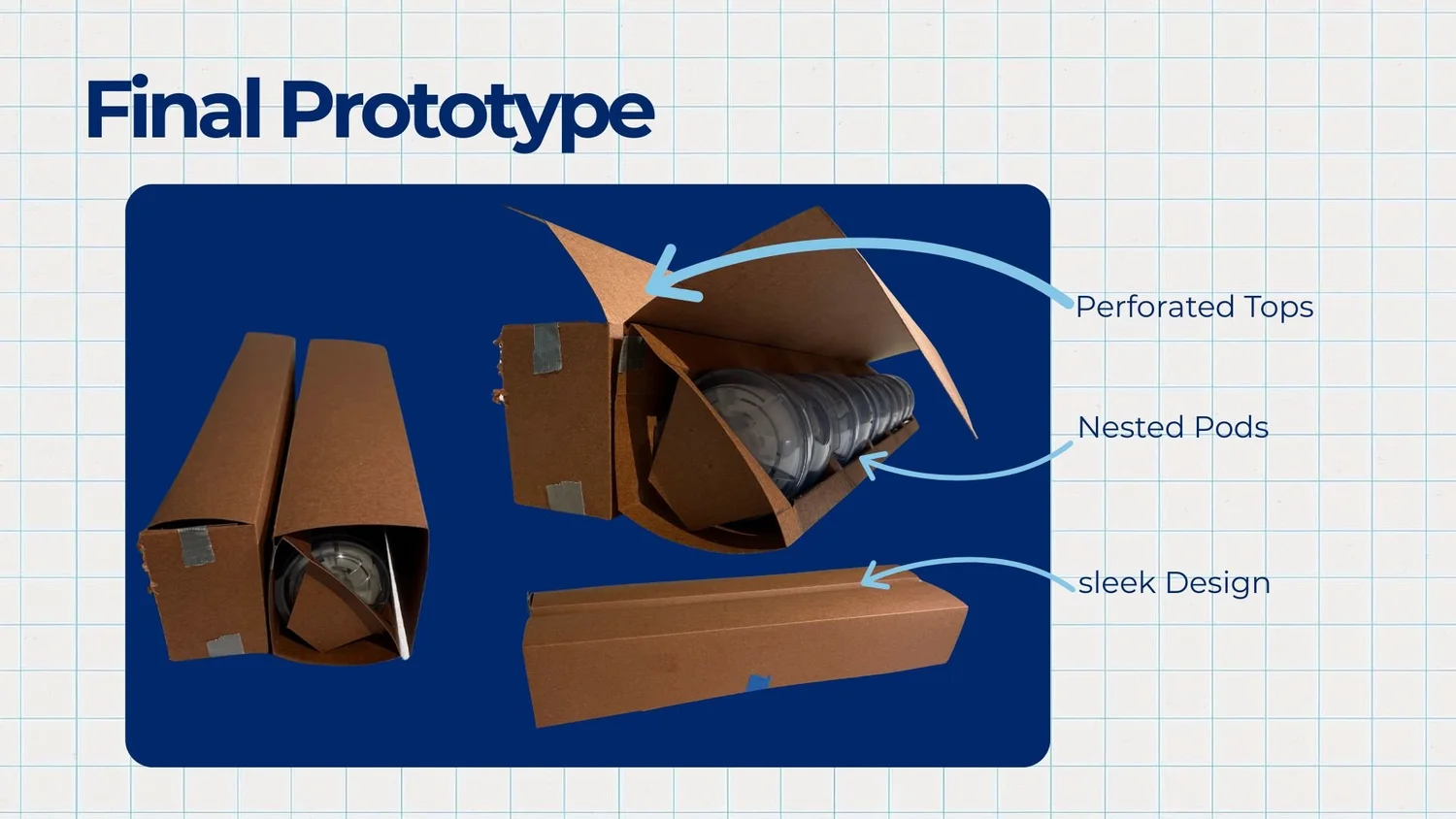
From macaron boxes and bread boxes to a nested, all-in-one design.
04 · Final product
Organized at home, returned for recycling
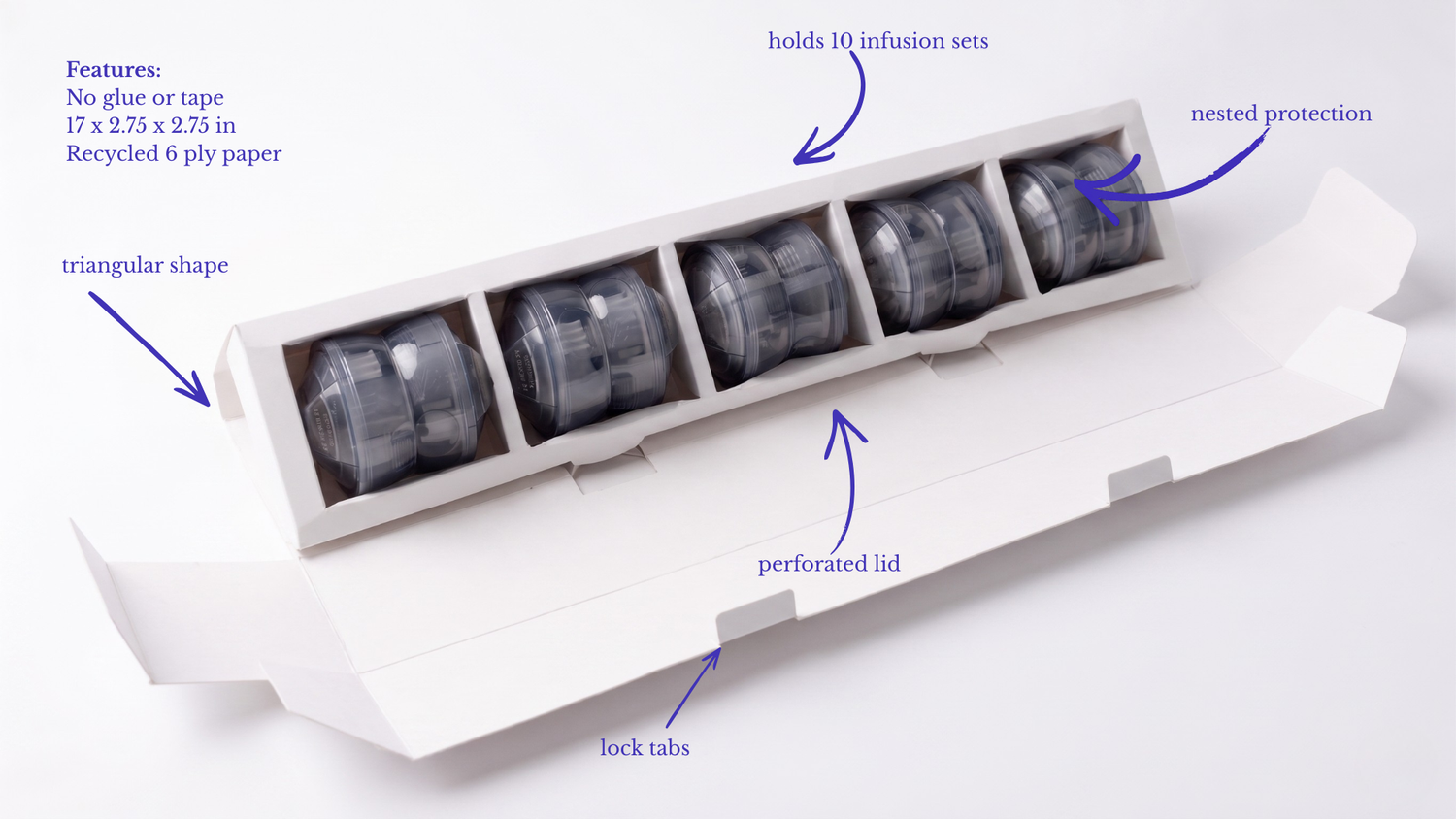
Nested pod box
Holds 10 infusion sets. Made from 100% recycled paper, with a removable perforated lid for easy access.
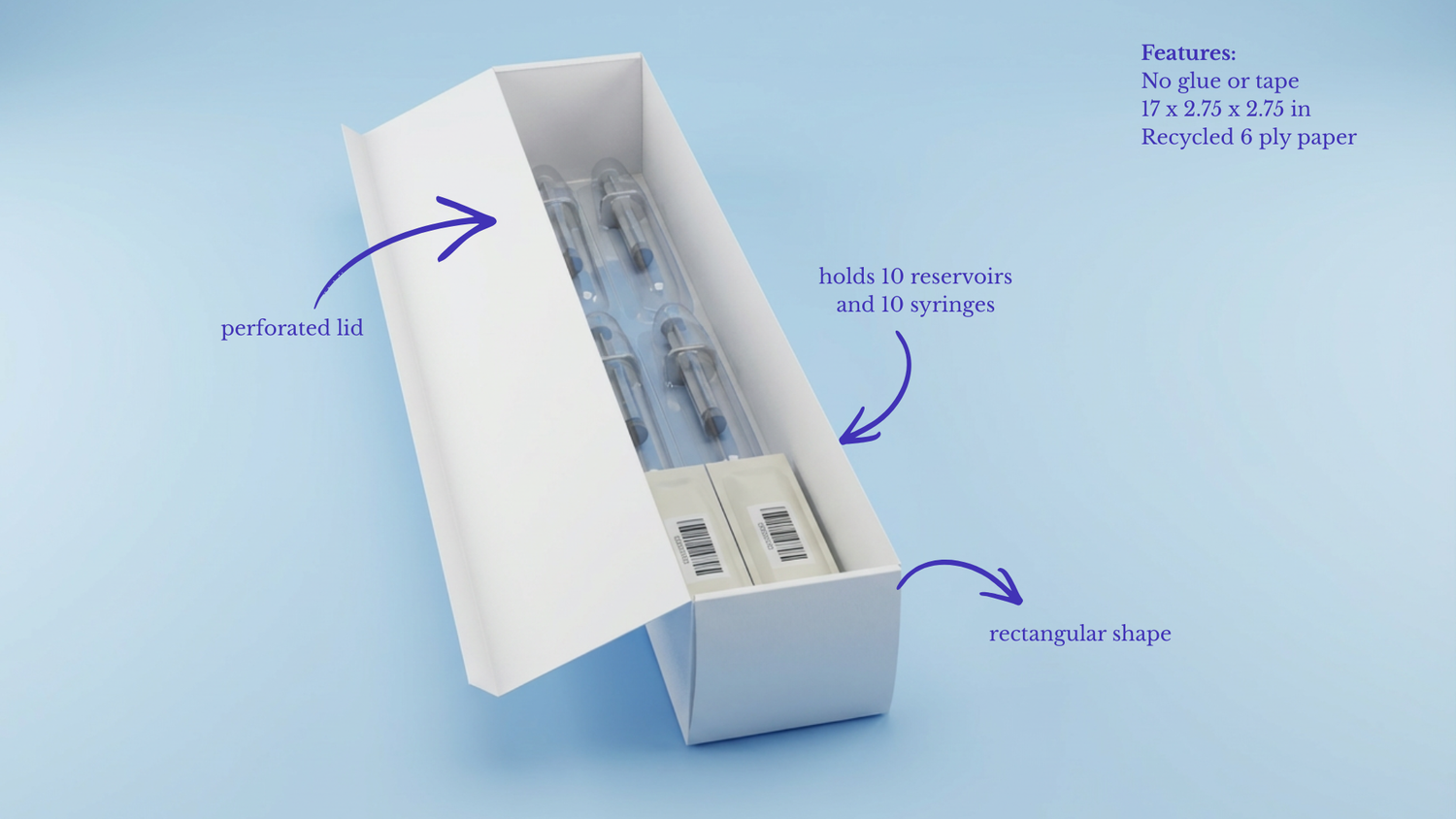
Syringe and cartridge container
Made from 100% recycled paper, 70% more sustainable than the leading packaging.
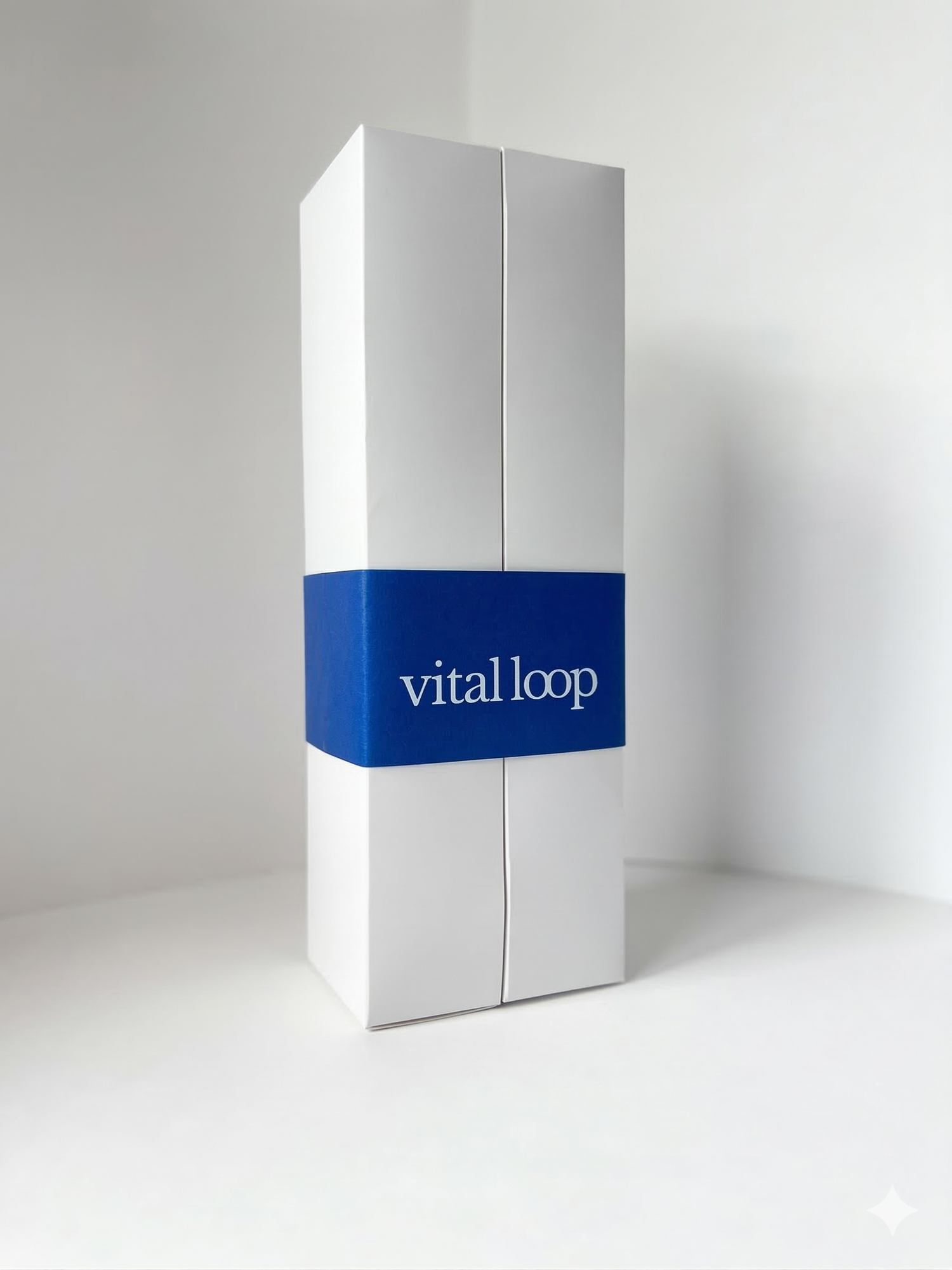
Simple exterior
Two boxes held together with a Vital Loop belly band, so any pump supplier could adopt the system.
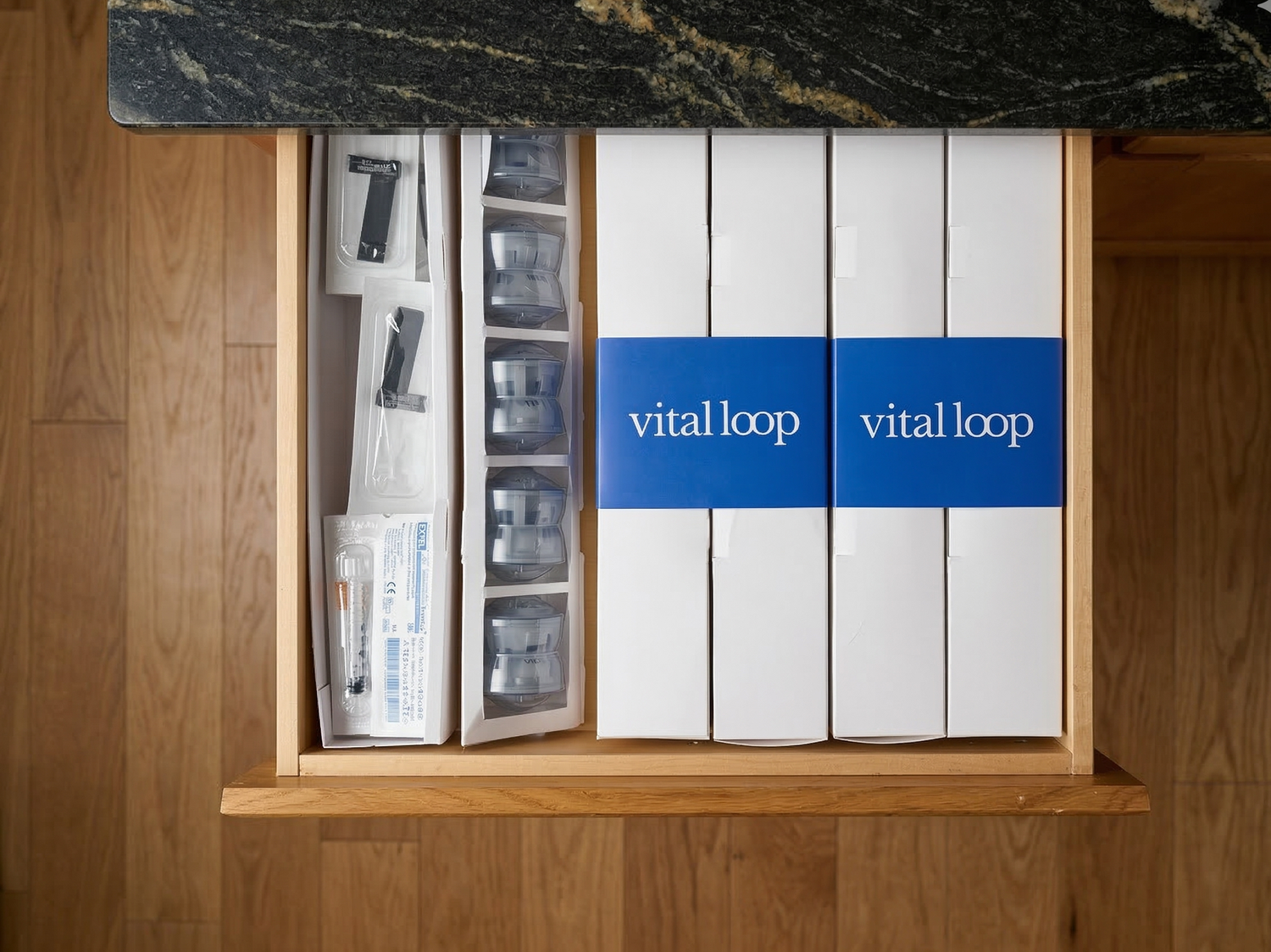
Fits where you live
Every box shares one footprint, so the packaging slides seamlessly into drawers and cabinets.
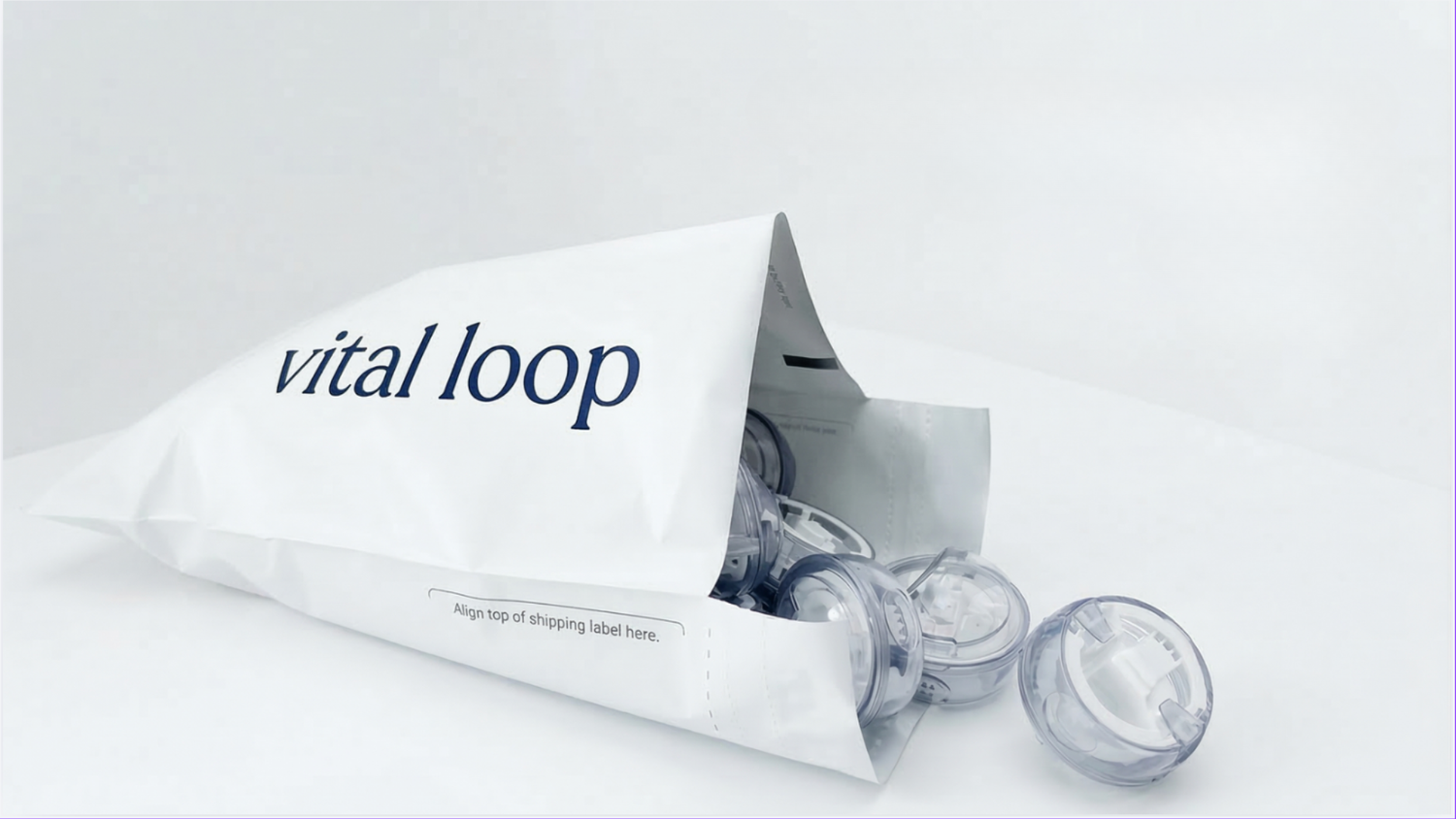
Prepaid return
A prepaid envelope sends sharps-free pods and syringes back for recycling.
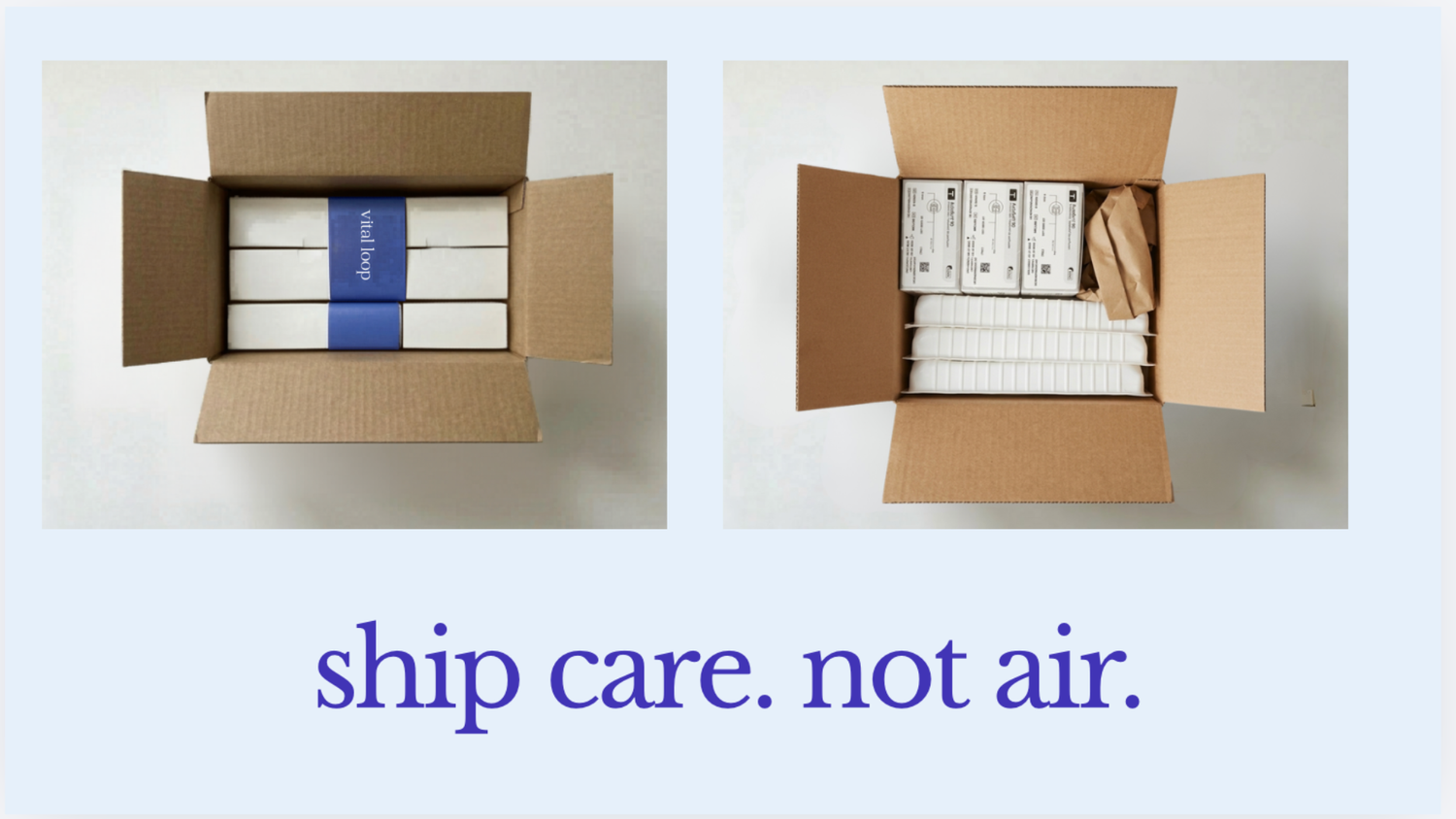
Less wasted space
Uniform boxes reduce empty space inside every shipping container.
05 · Sustainability goals and frameworks
Built to report against
UN SDGs
12.5 Substantially reduce waste generation through prevention, reduction, recycling and reuse by 2030
12.6 Encourage companies to adopt sustainable practices and report on sustainability
13.3 Improve education and awareness on climate change mitigation
17.17 Promote effective public, public-private and civil society partnerships
GRI
301 · Materials
301-1 Materials used by weight or volume
301-2 Recycled input materials used
301-3 Reclaimed products and packaging
306 · Waste
306-2 Managing waste-related impacts
306-3/4 Waste generated and diverted
305 · Emissions
305-5 Reduction of GHG emissions
SASB
Medical Equipment and Supplies
HC-MS-410a.1 Product design and lifecycle
HC-MS-430a Supply chain management
HC-MS-250a Product safety
Health Care Delivery
HC-DY-150a.1 Waste management
Waste Management
IF-WM-420a.3 Recycling and resource recovery
vital loop
Supporting life. Reducing waste.