Vital loop is for people with Type 1 Diabetes who are frustrated with managing their insulin pump supplies. Our product is a packaging solution that benefits both the users and the planet. Unlike traditional insulin pump suppliers, our service organizes materials at home and enables the user to return their waste, integrating circularity with production.
The Challenge:
Advances in diabetes technology, especially insulin pumps, have greatly improved glycemic control, quality of life, and health outcomes for people with Type 1 diabetes (Heinemann & Klonoff, 2022). However, as insulin pump use increases, so does the volume of related medical waste, such as infusion sets, reservoirs, tubing, sensors, adhesives, batteries, and single-use plastic packaging. This waste is made of non-biodegradable plastics and electronic components that add to landfill accumulation, microplastic pollution, and greenhouse gas emissions from production and disposal (Hossmann, Brandt, & Heinemann, 2025).
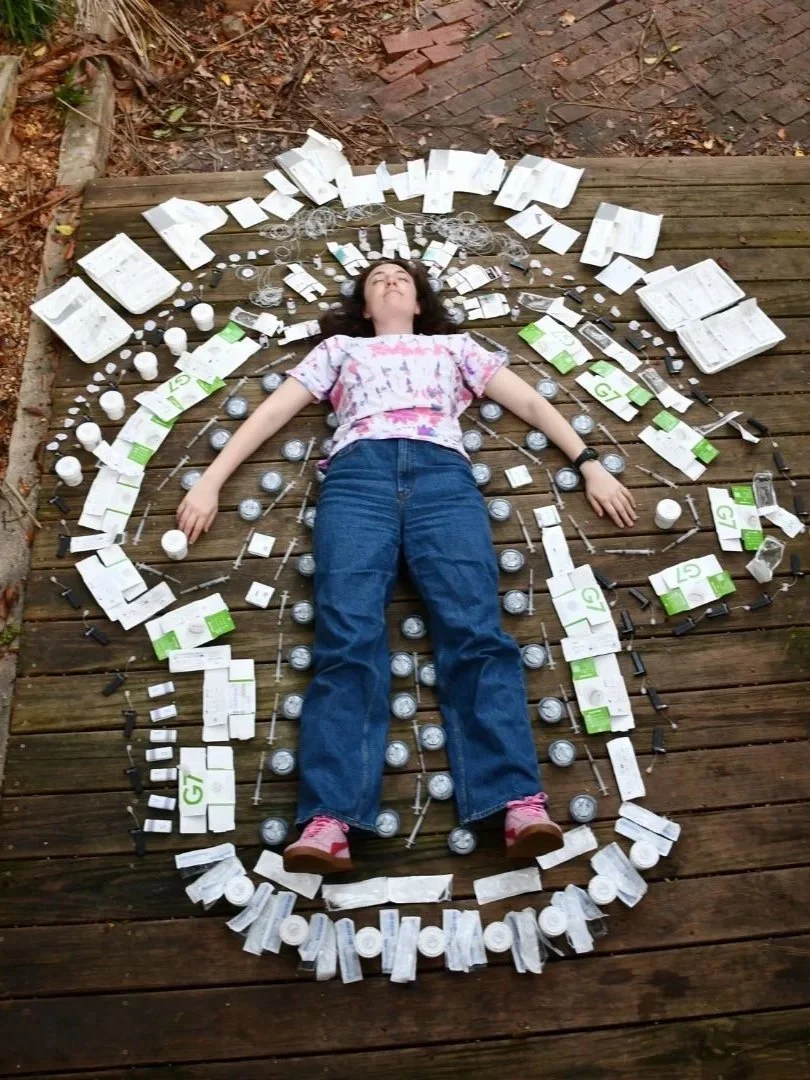
3 months of diabetes-related waste
Research :
Qualitative research helps me define and frame the problem space. As a systems thinker, I take on multiple roles during the exploratory research phase, examining challenges from several angles. In studying the insulin pump system, I analyzed packaging and manufacturing regulations, traced the product’s design evolution, reviewed broader data to understand the scale of the issue, and evaluated sustainability policies in practice.
Step 1: understand the problem
I use quantitative research to measure and validate the problem. I conducted interviews with eight different people living with T1D and shared a survey which received over 140 responses. My research aimed to answer these four questions:
What does the ordering process look like?
How are customers storing their supplies?
How are the supplies disposed of?
What is the user’s ideal experience?
Step 2: validate the problem
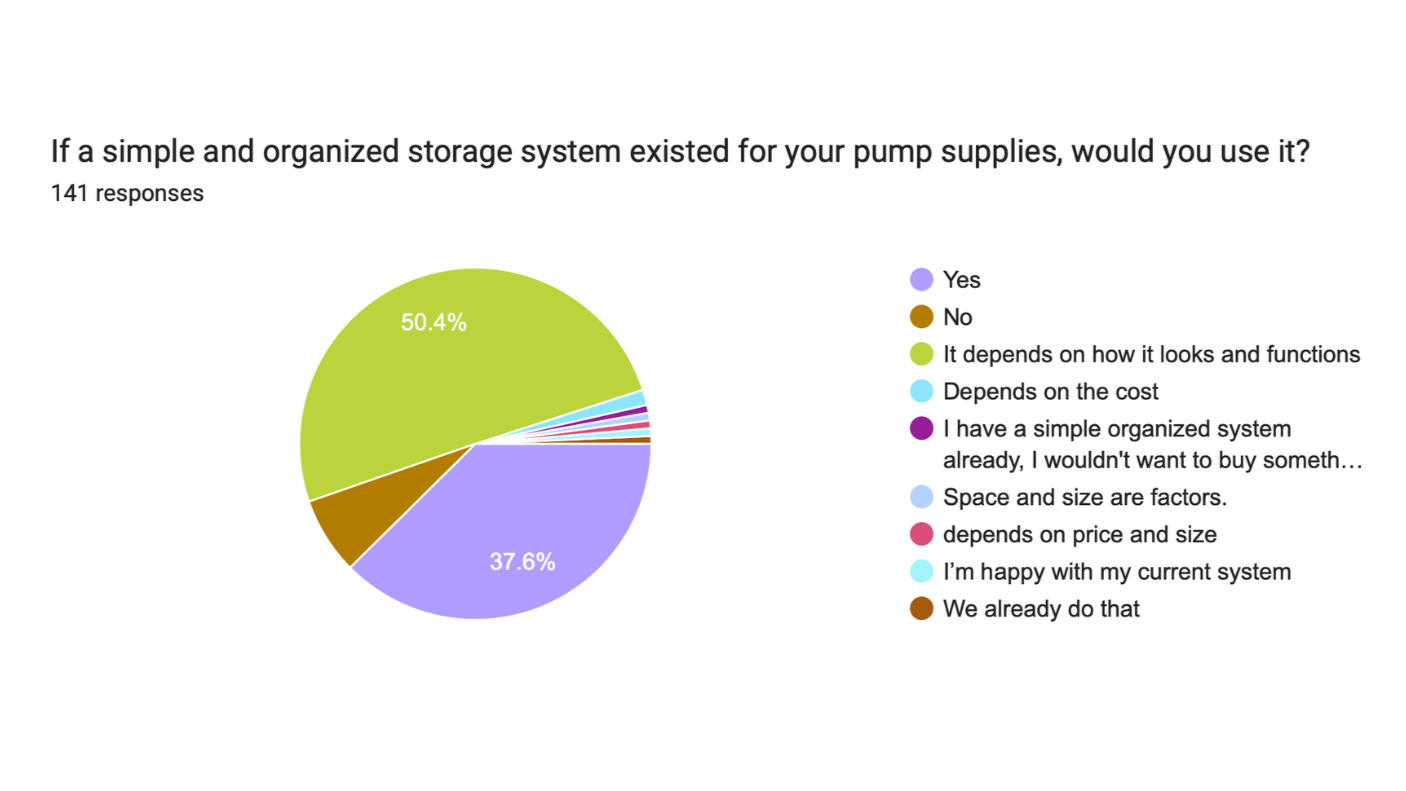
Over 88% of survey responders are interested in a new product to store and organize their supplies
I collected all of my research into spreadsheets and organize the data points into categories. These categories shape the “ideal experience” for the user. Once I understand the users wants and needs, I start the design process.
Step 3: affinitize the data
Design :
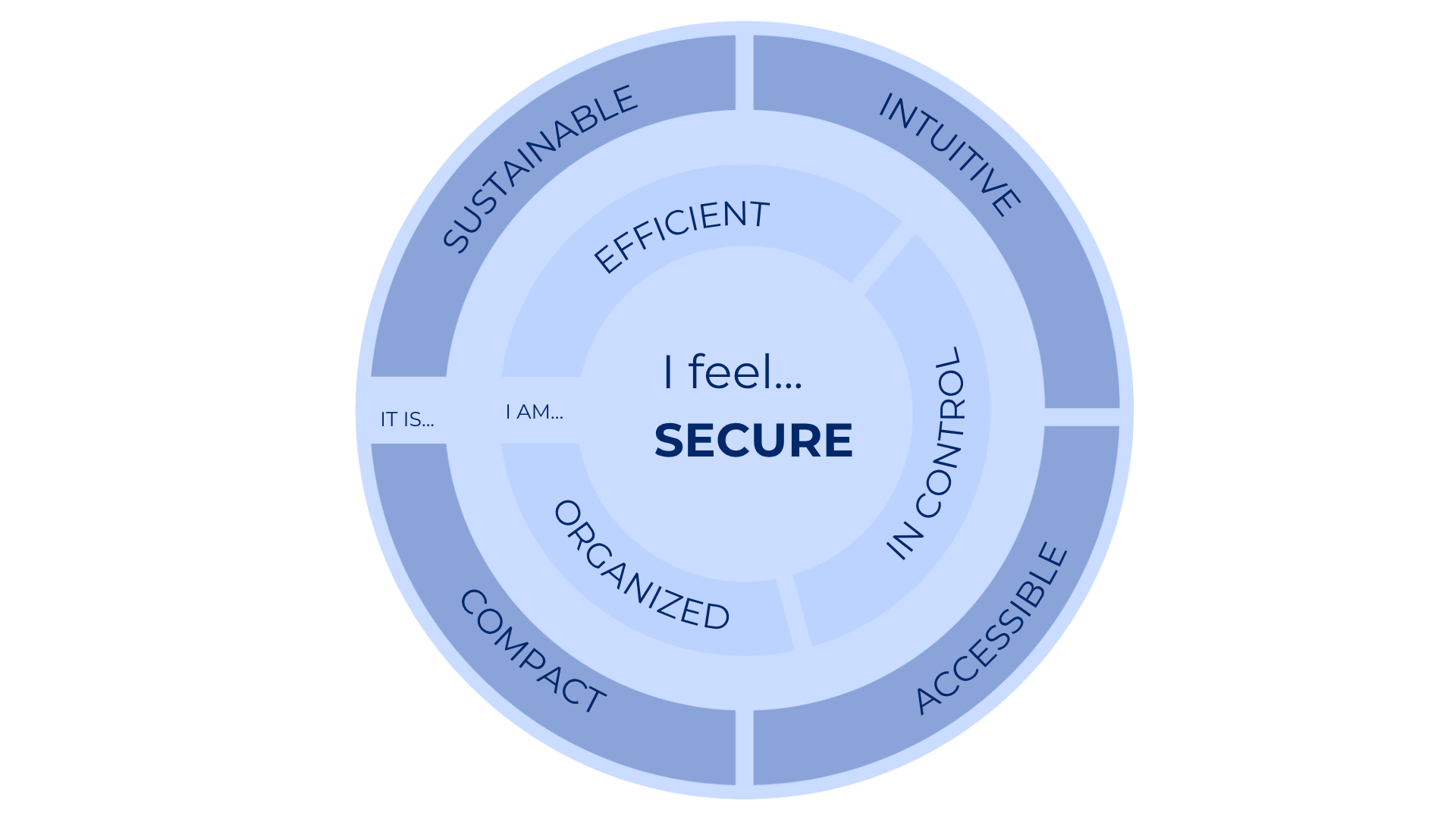
Based on my research, the design needed to accomplish 2 goals:
Be more sustainable than the current packaging
Keep the supplies organized and easily accessible
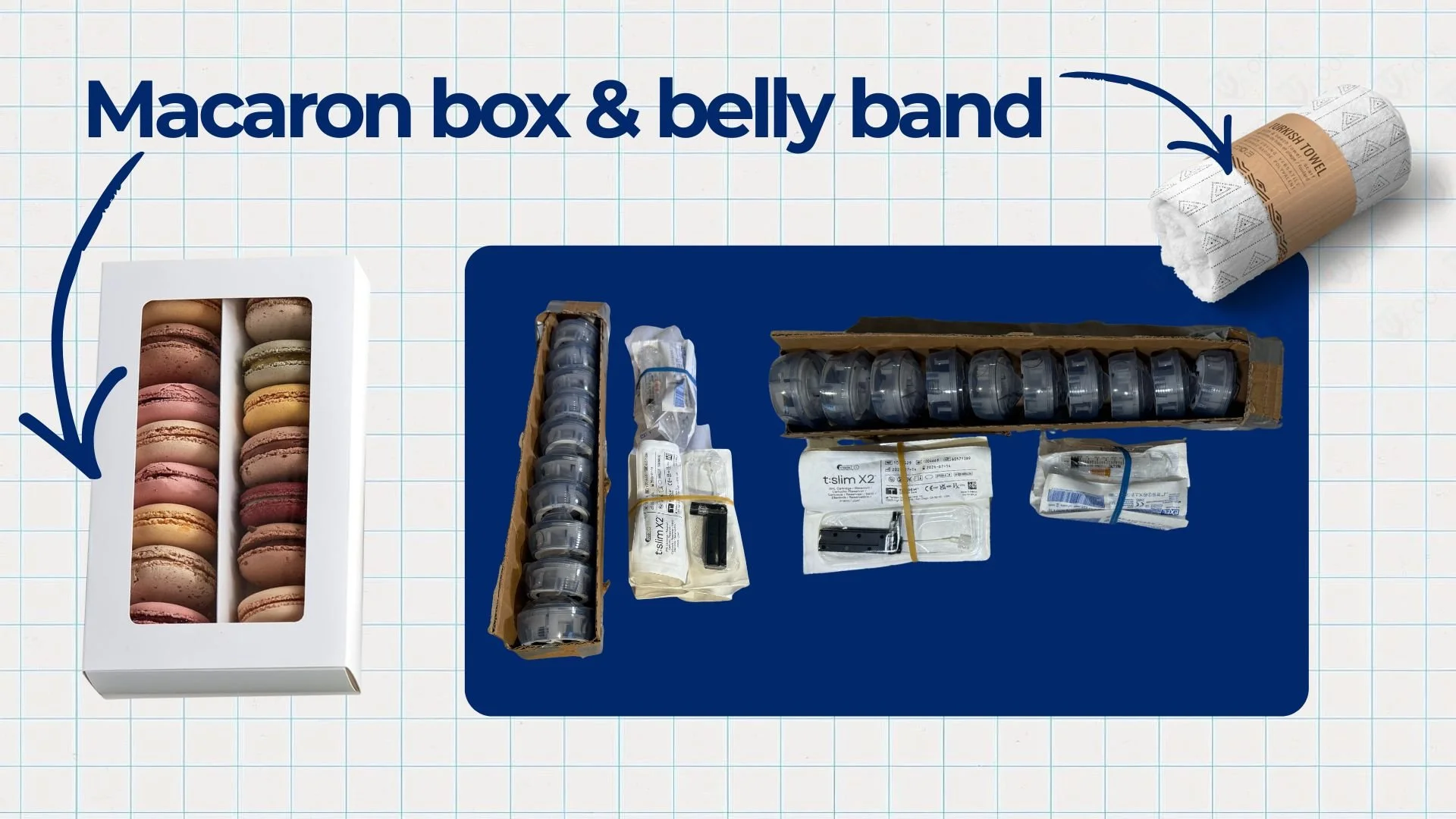
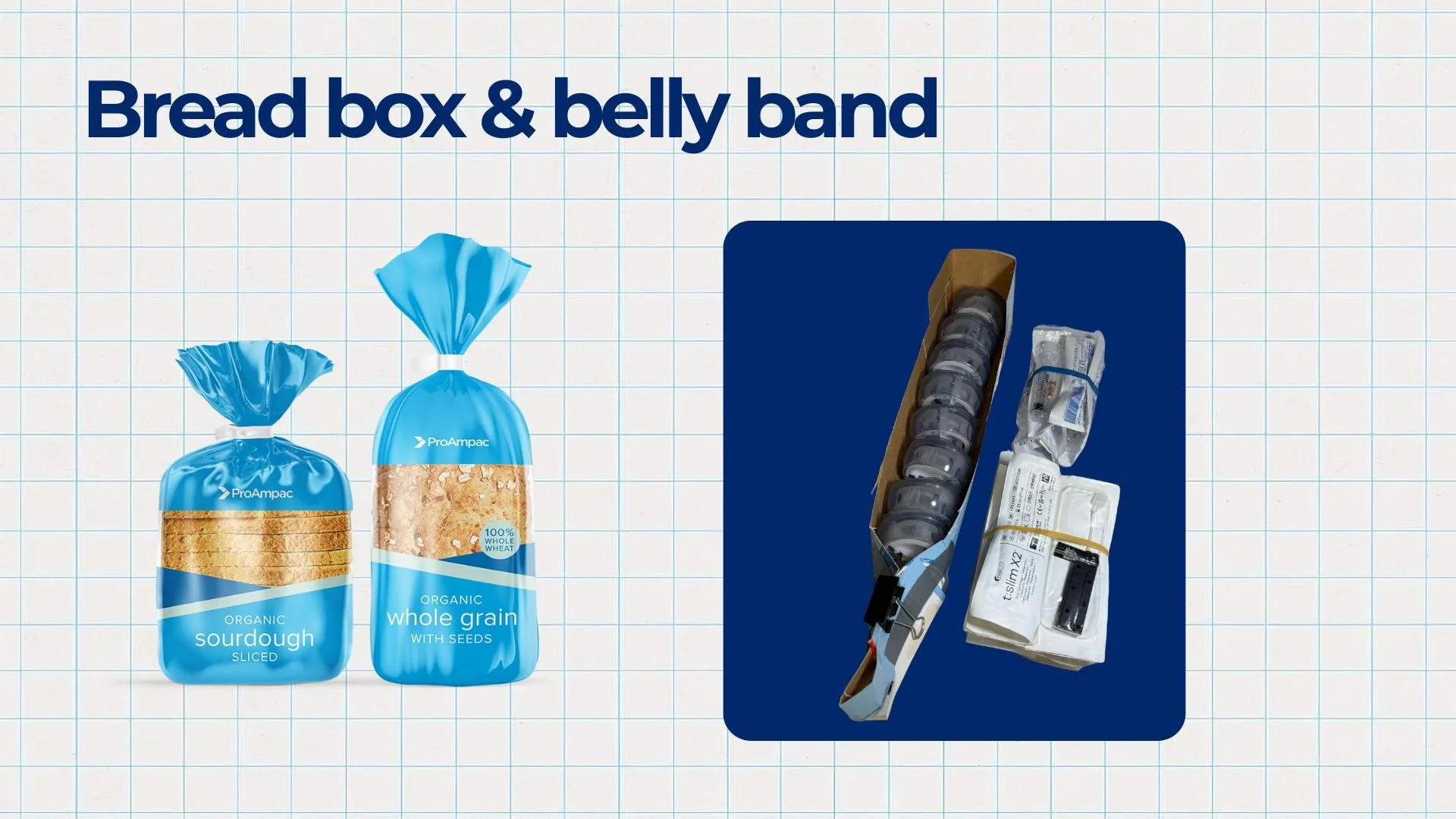
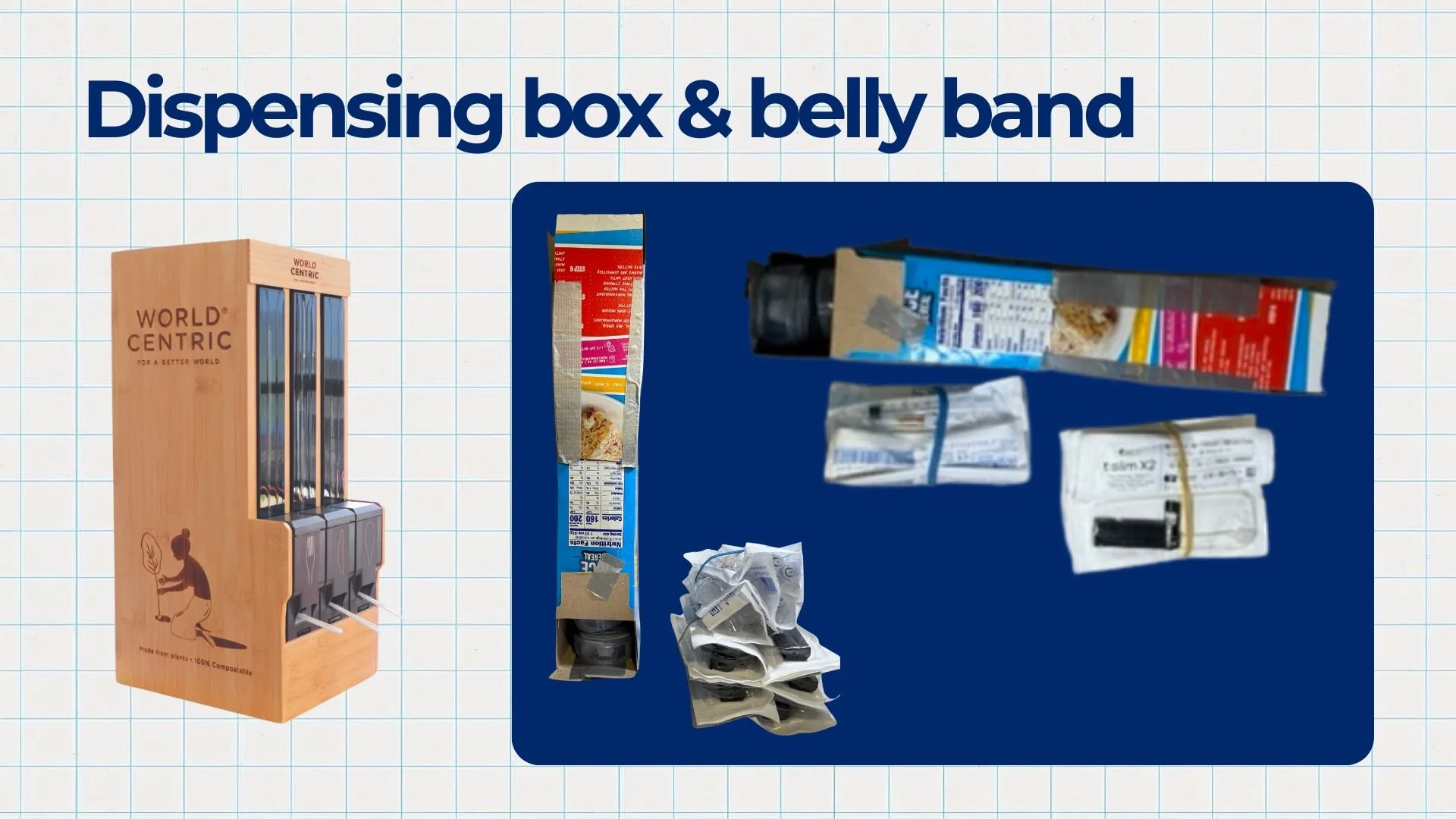
Click through some of the design prototypes to understand my process:
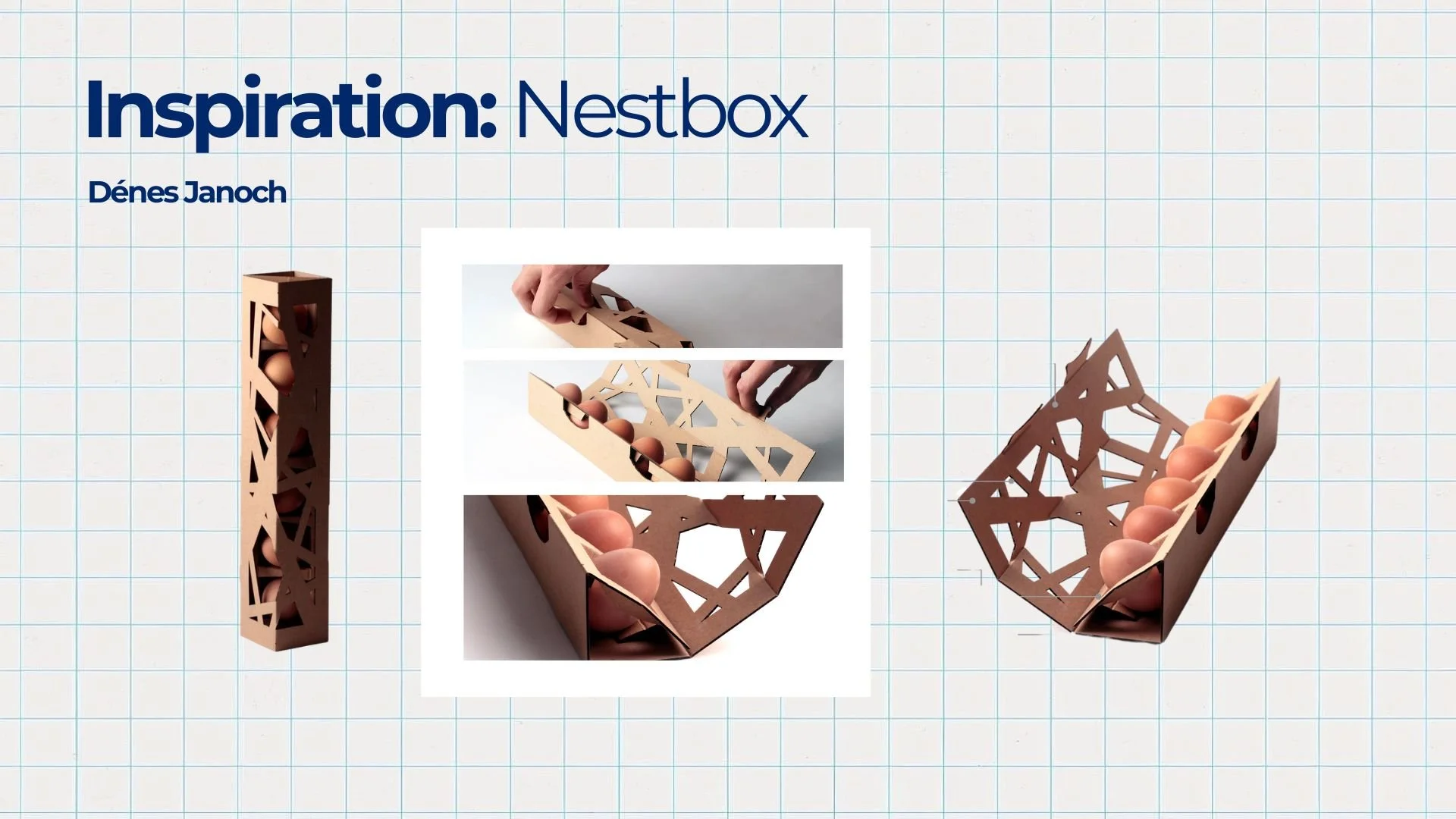
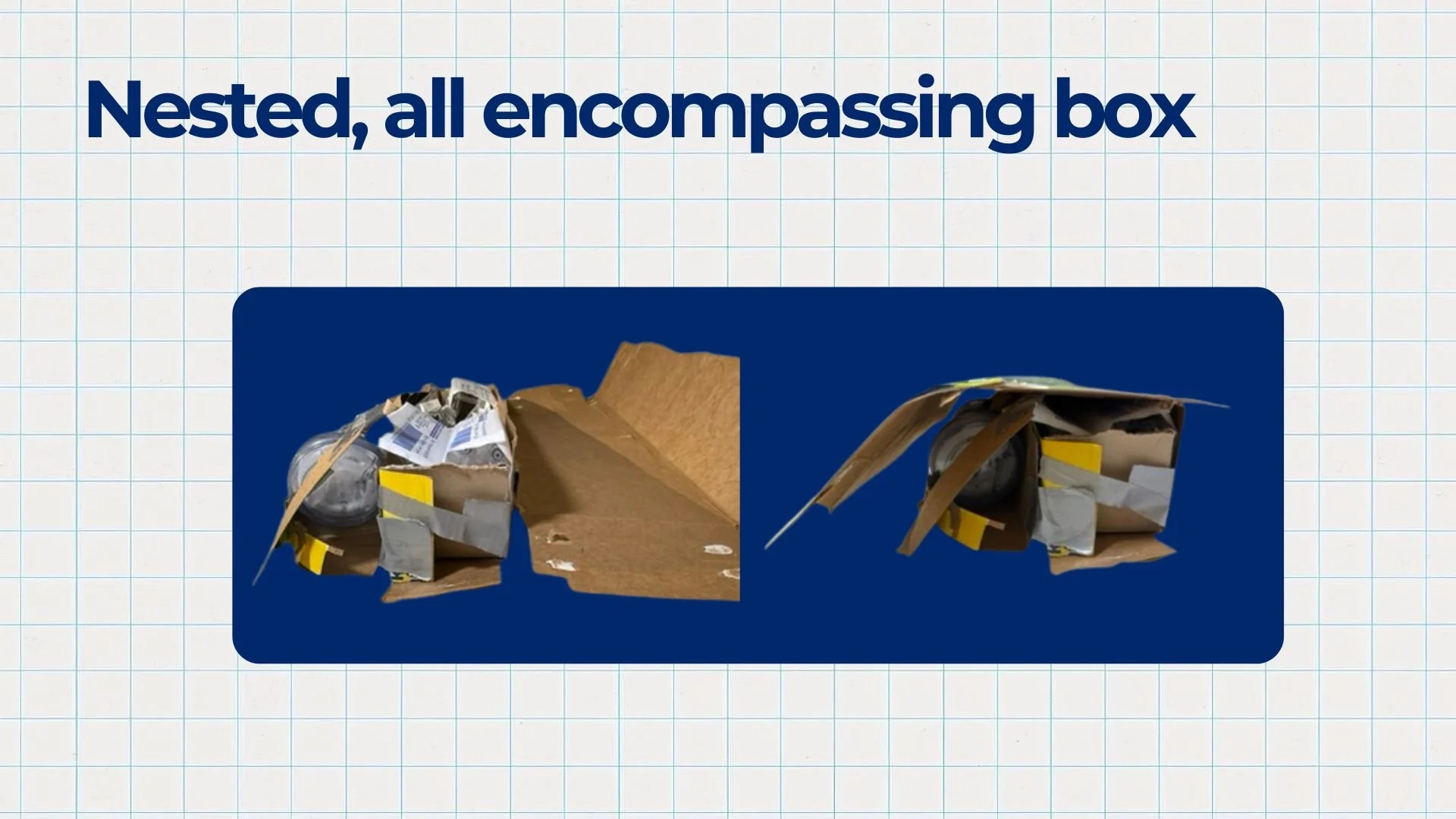
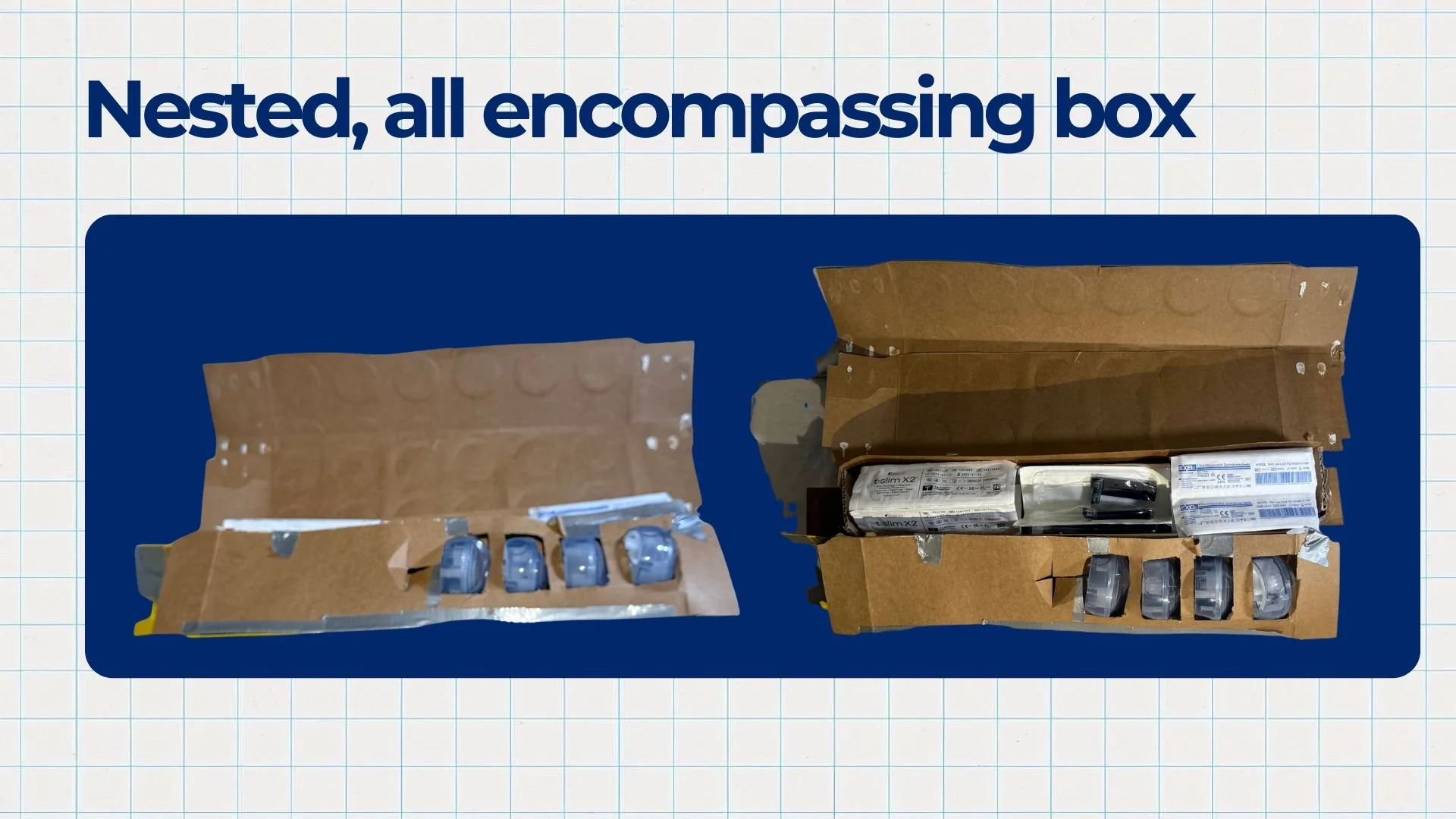
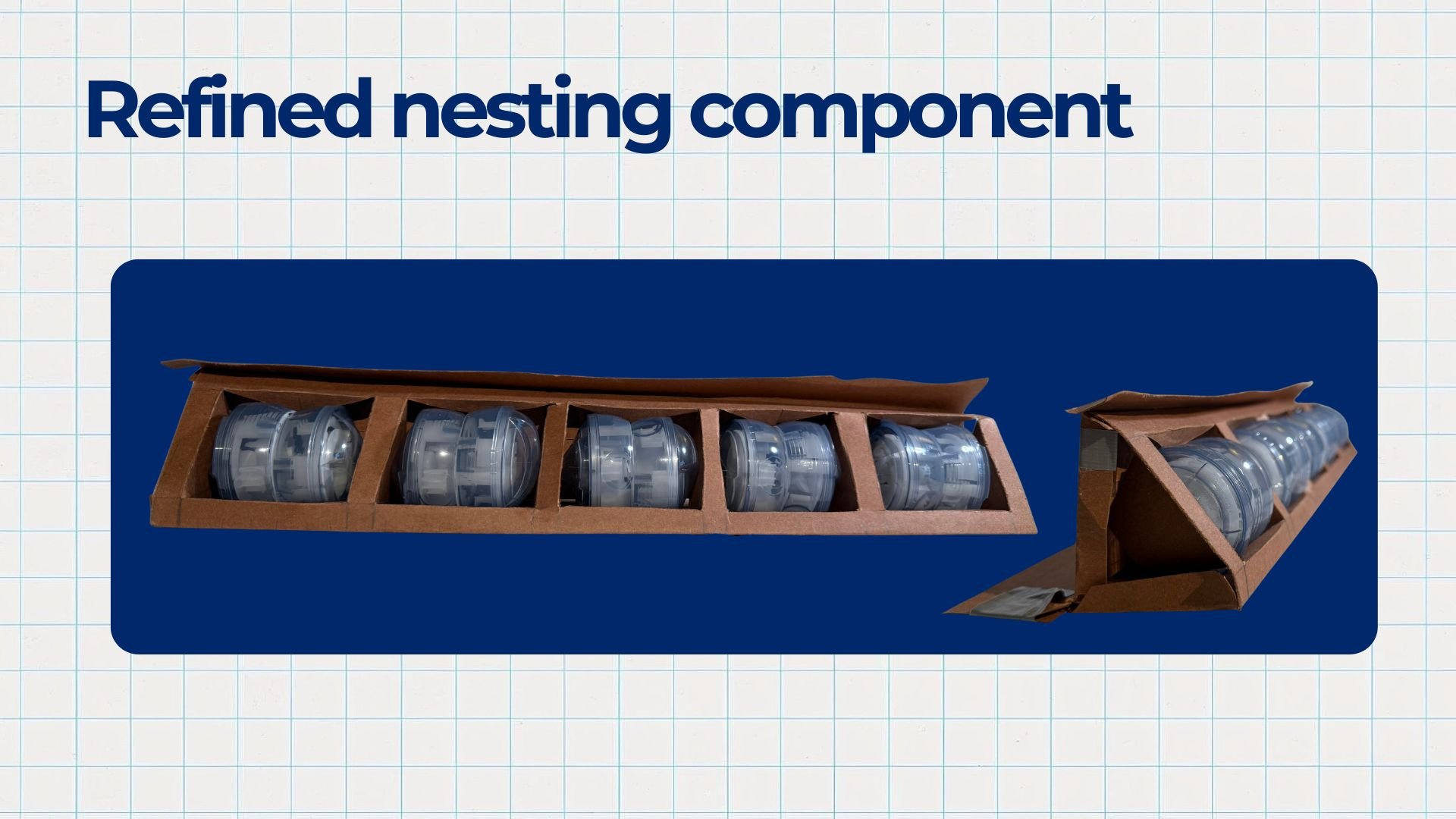
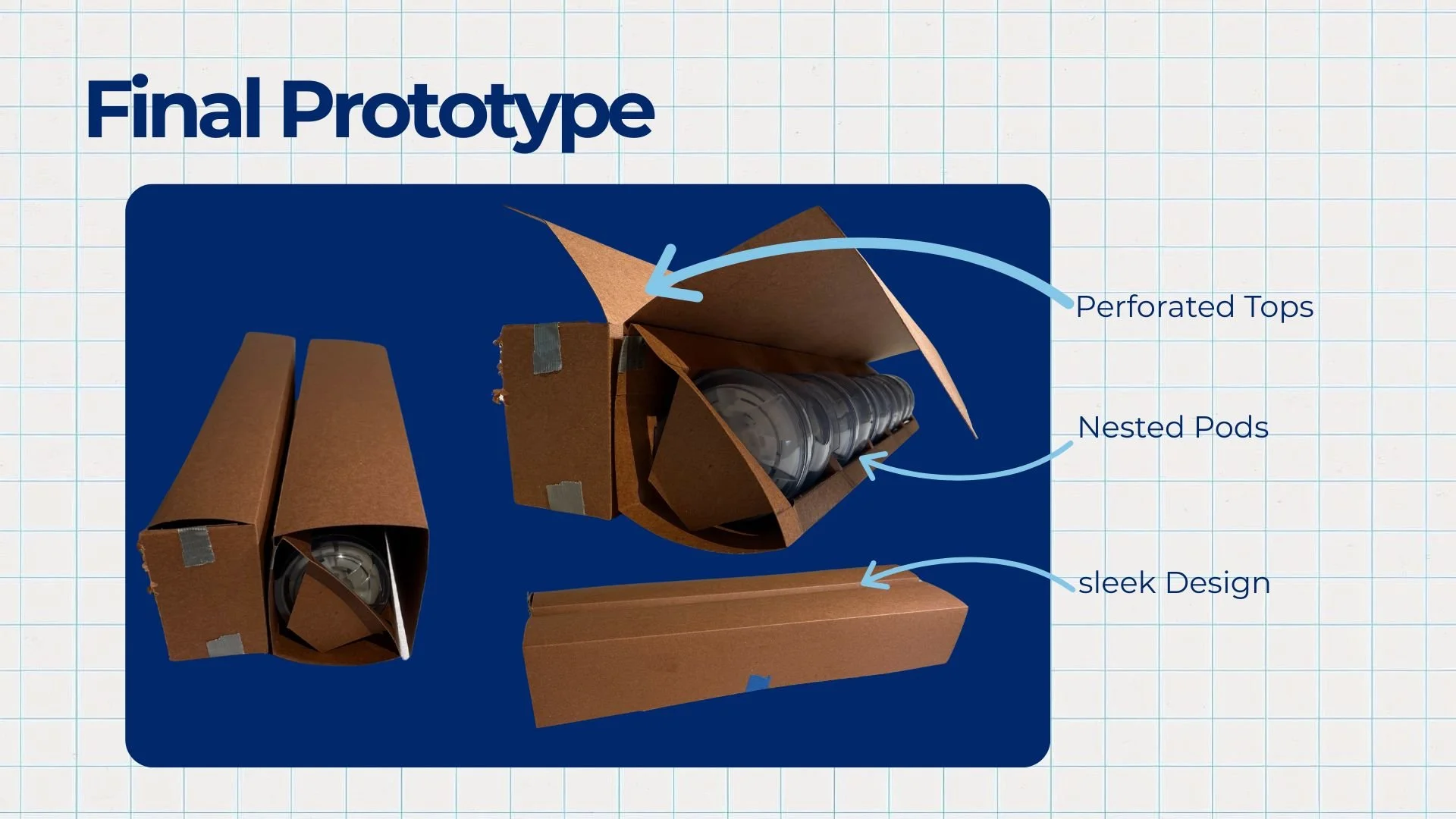
Final Product:
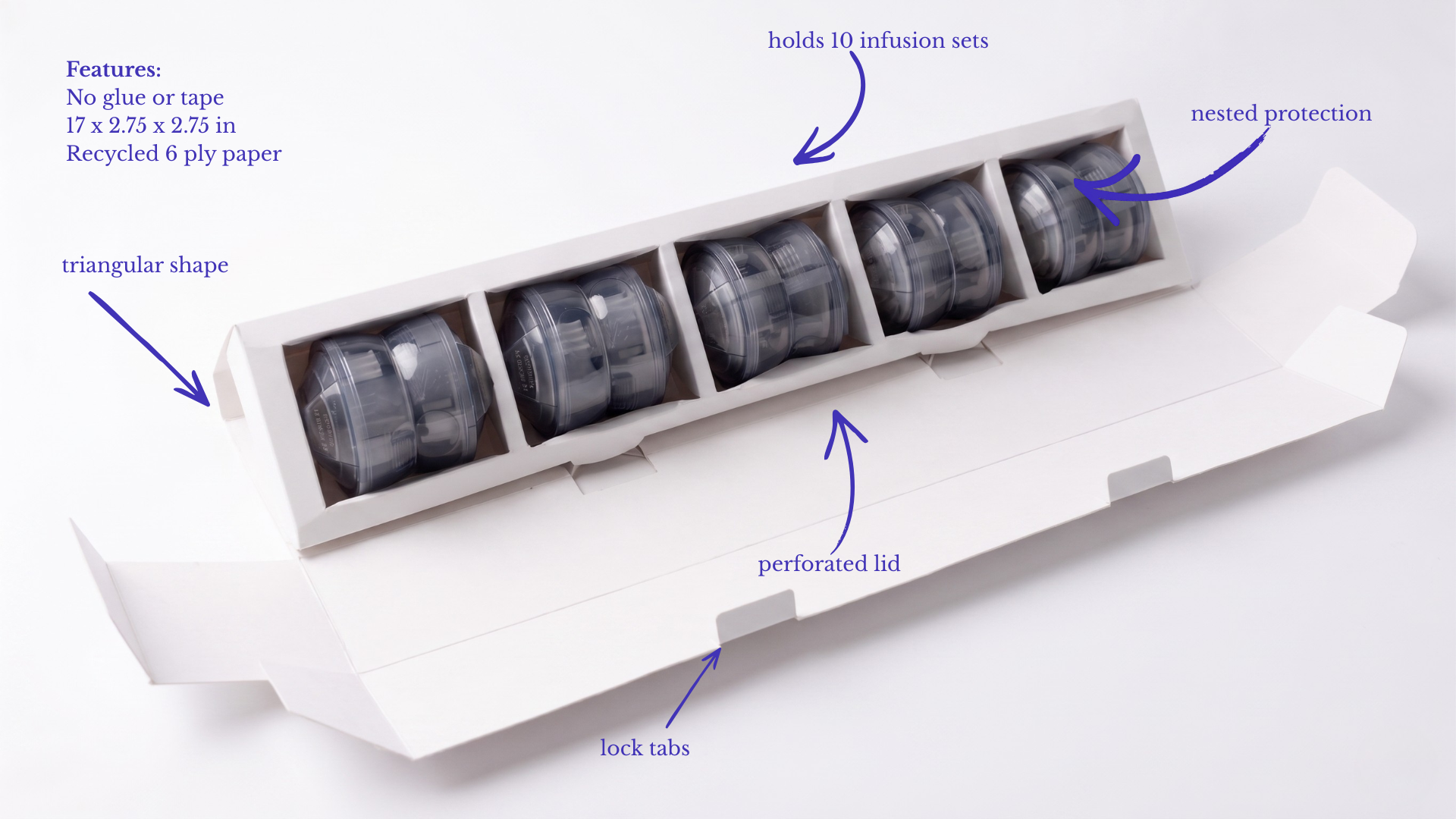
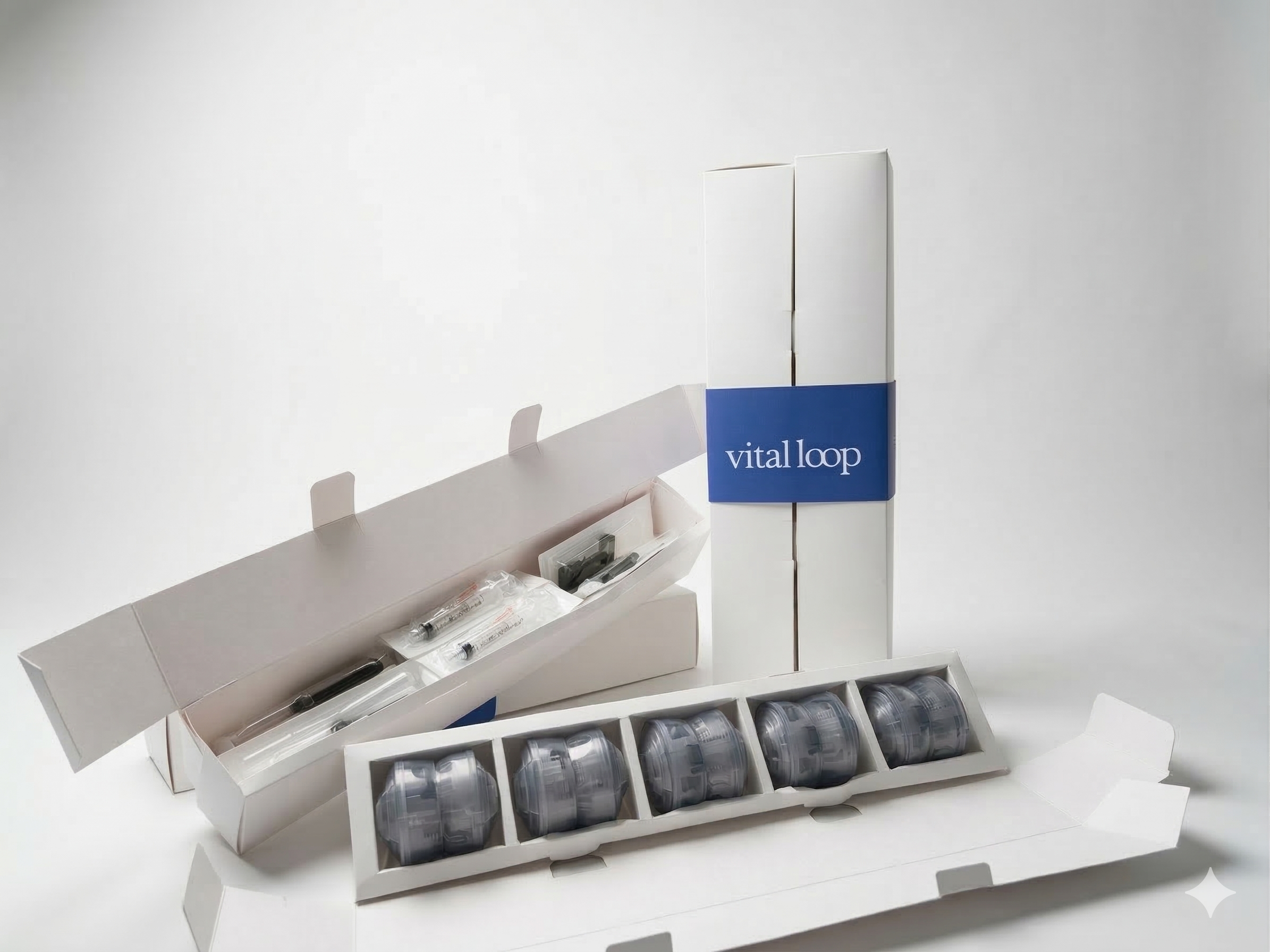
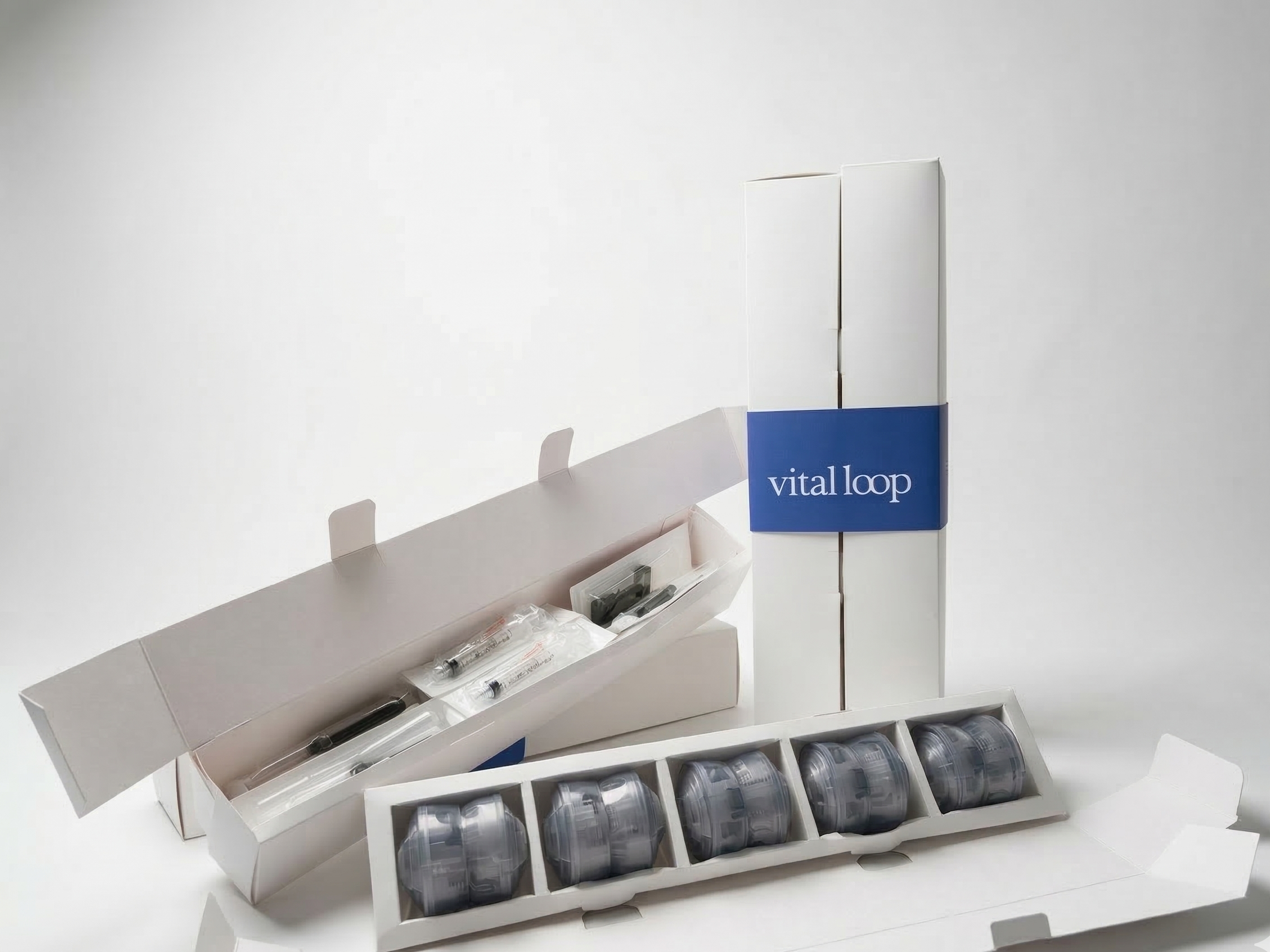
Nested pod box containing 10 infusion sets. Made from 100% recycled paper. 45% more sustainable than previous packaging.
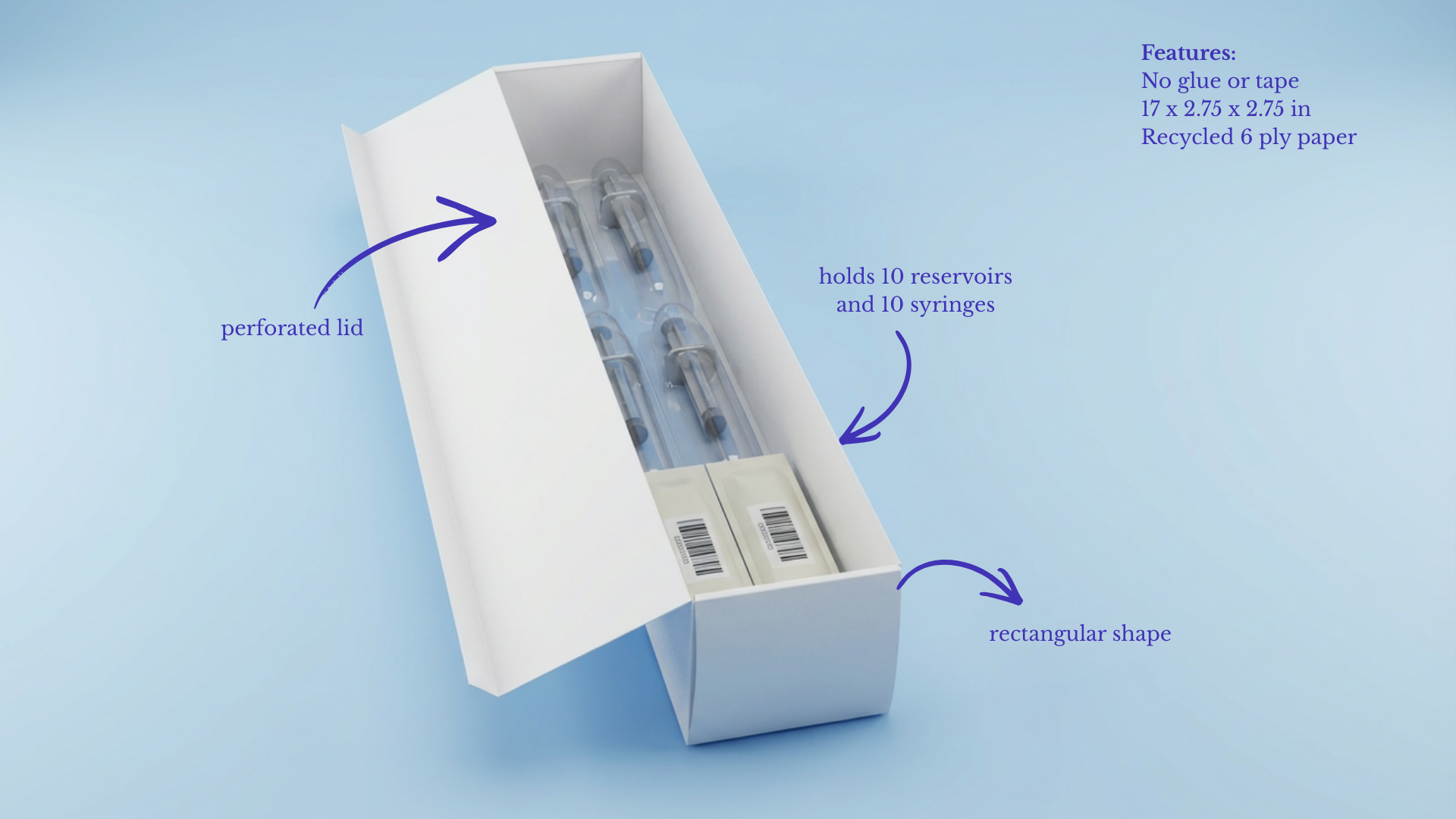
Syringe and cartridge container. 100% recycled paper, 70% more sustainable than the leading packaging.
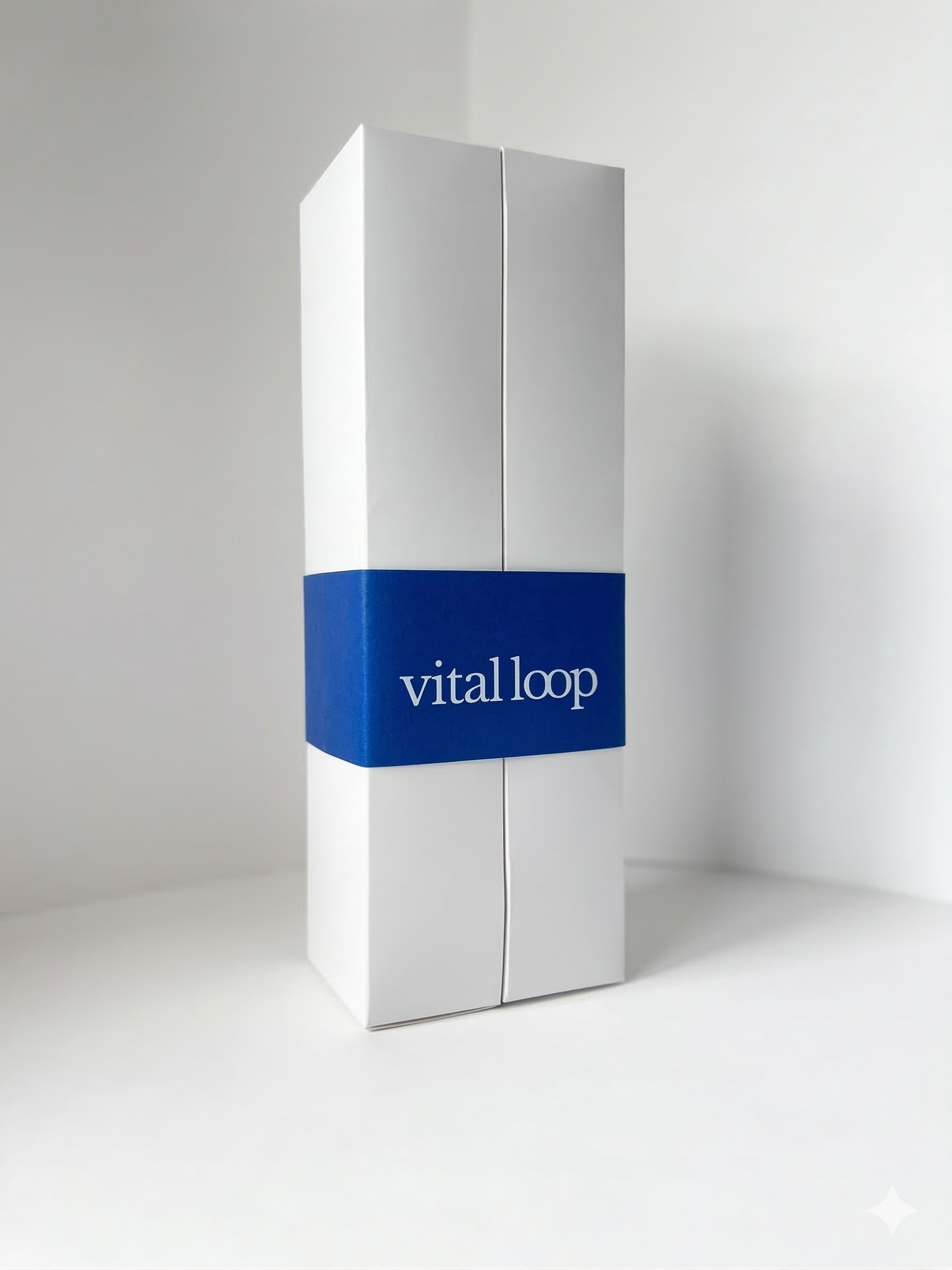
Simple packaging exterior for white-labeling product. Two boxes are held together with a vital loop belly band.
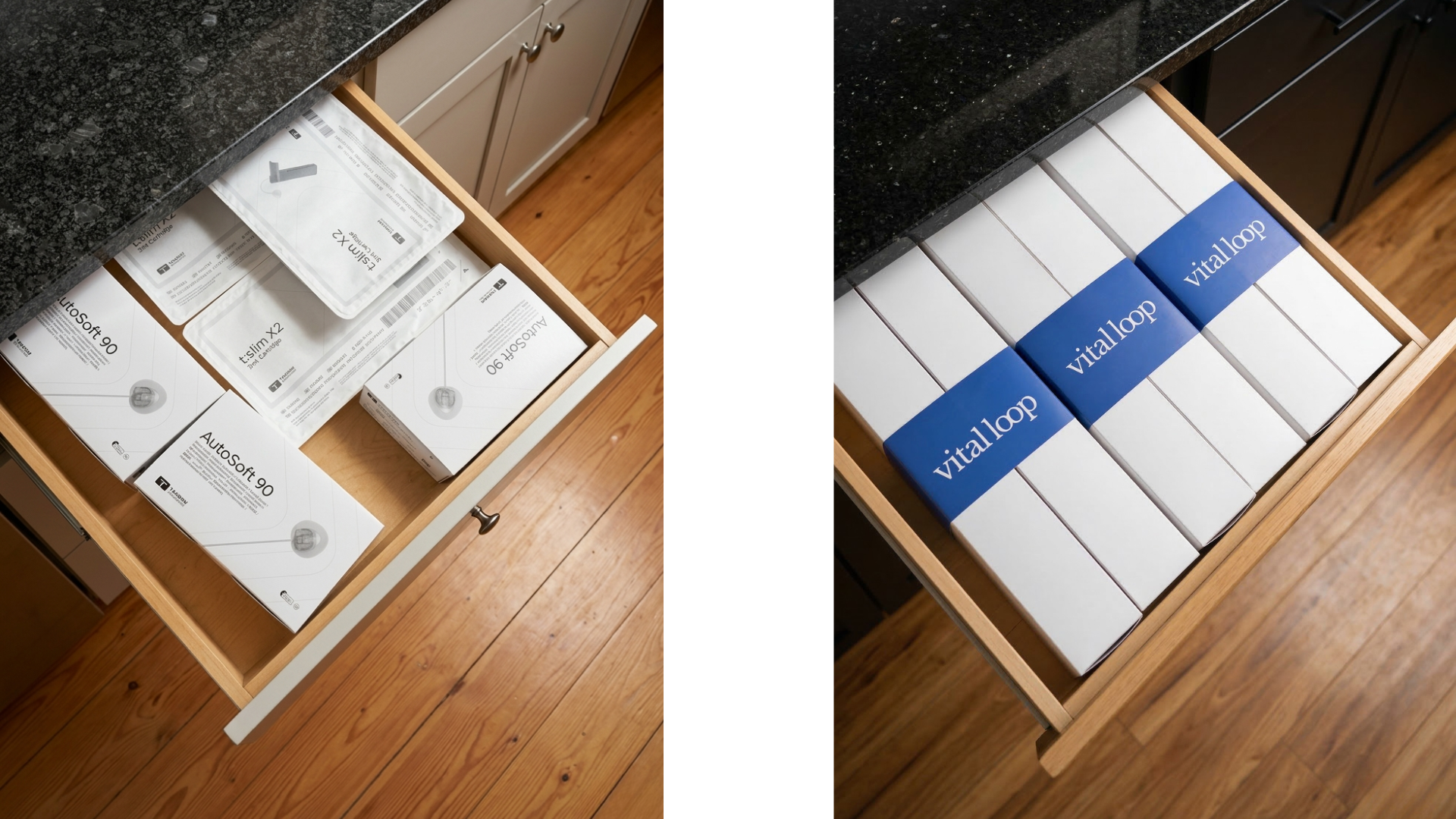
vs
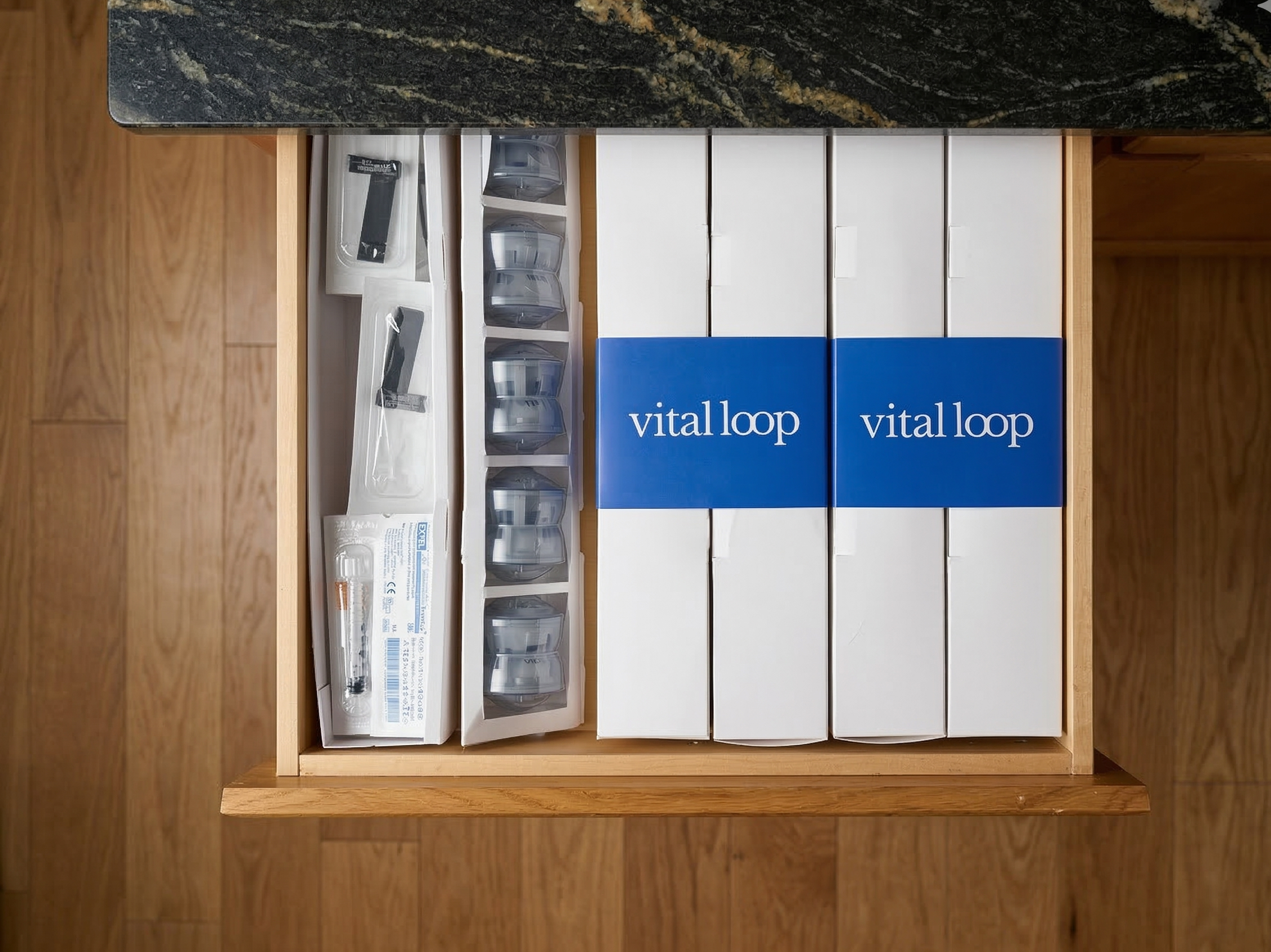
Removable perforated lid for easy access to supplies.
6 boxes, 1 dimension
Vital loop’s packaging seamlessly fits into drawers and cabinets.
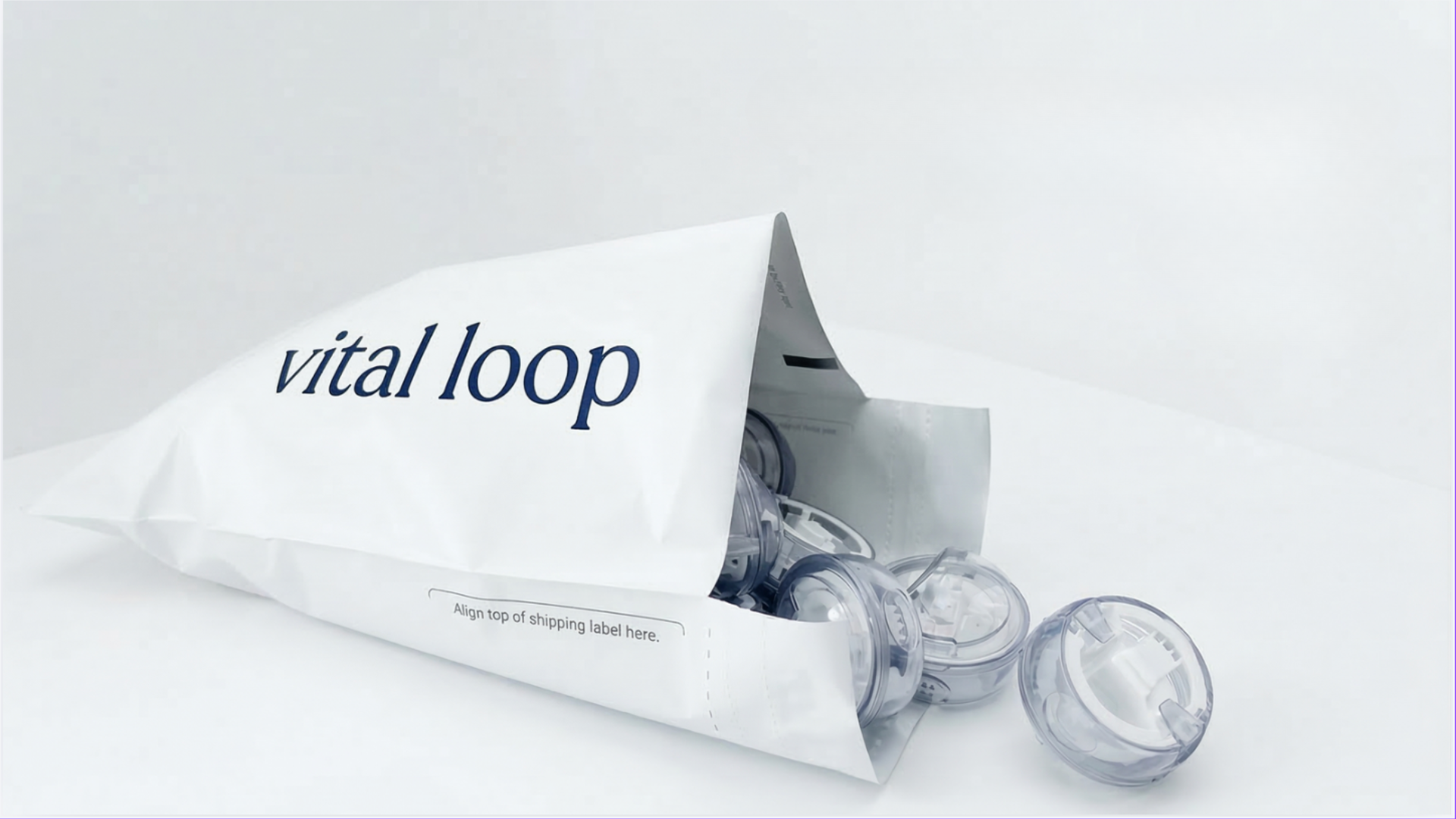
Pre-paid envelope included to return the sharp-less pods & syringes for recycling.
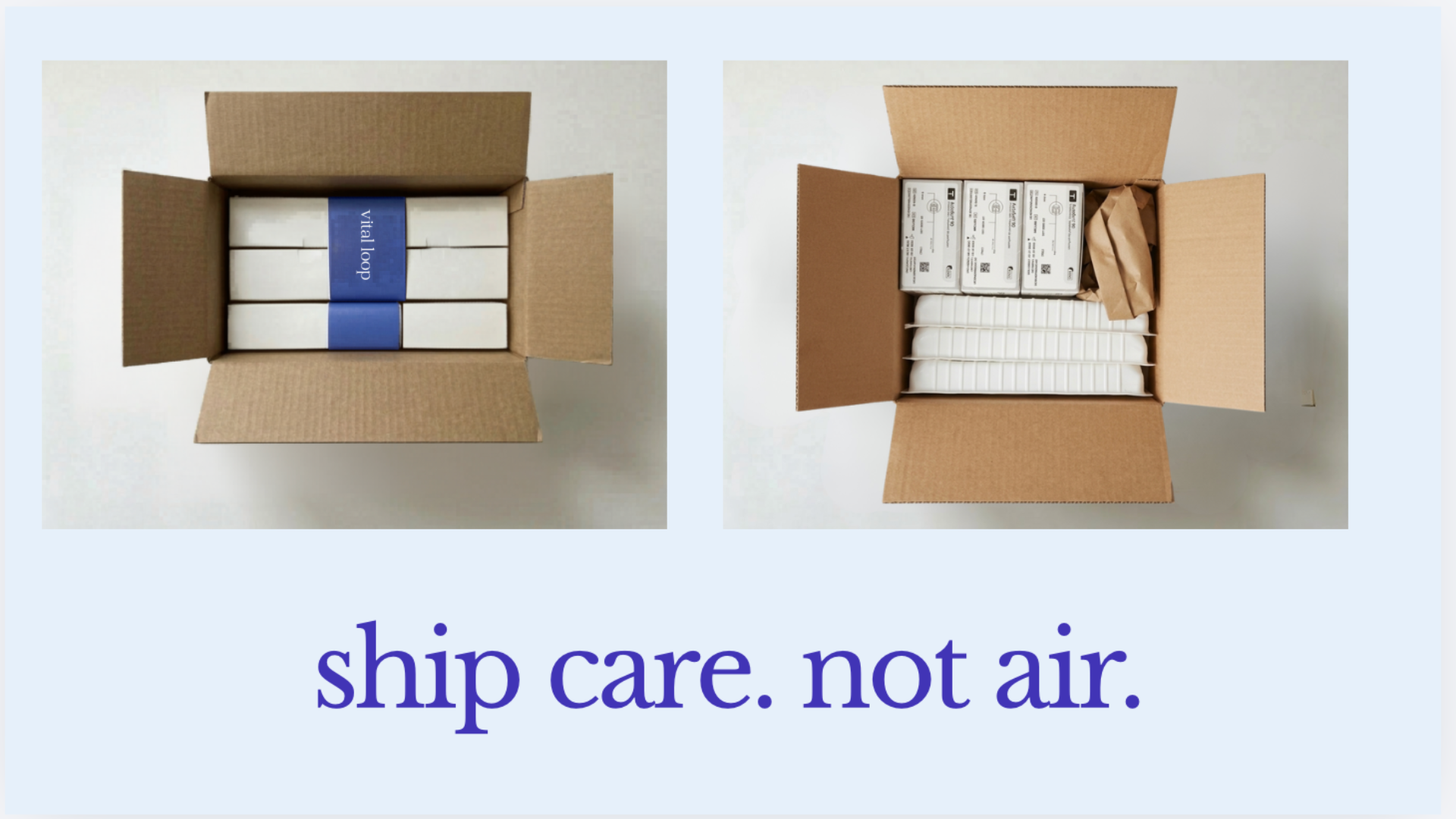
Reduced wasted space in shipping container.
Sustainability Goals & Certificaitons:
UN SDGs
12.5: By 2030, substantially reduce waste generation through prevention, reduction, recycling and reuse
12.6: Encourage companies, especially large and transnational companies, to adopt sustainable practices and to integrate sustainability information into their reporting cycle
13.3: Improve education, awareness-raising and human and institutional capacity on climate change mitigation, adaptation, impact reduction and early warning
17.17: Encourage and promote effective public, public-private and civil society partnerships, building on the experience and resourcing strategies of partnerships
GRI
GRI 301 — Materials
301-1: Materials used by weight or volume
301-2: Recycled input materials used
301-3: Reclaimed products and packaging materials
GRI 306 — Waste
306-2: Management of significant waste-related impacts
306-3/306-4: Waste generated and diverted from disposal
GRI 305 — Emissions
305-5: Reduction of GHG emissions
SASB
Medical Equipment & Supplies
Product Design & Lifecycle Management (HC-MS-410a.1)
Supply Chain Management (HC-MS-430a)
Product Safety (HC-MS-250a)
Health Care Delivery
Waste Management (HC-DY-150a.1)
Waste Management
Recycling & Resource Recovery (IF-WM_420a.3)