Biomimicry · Product + service design
HYDROCORE
A biomimetic washing machine filter
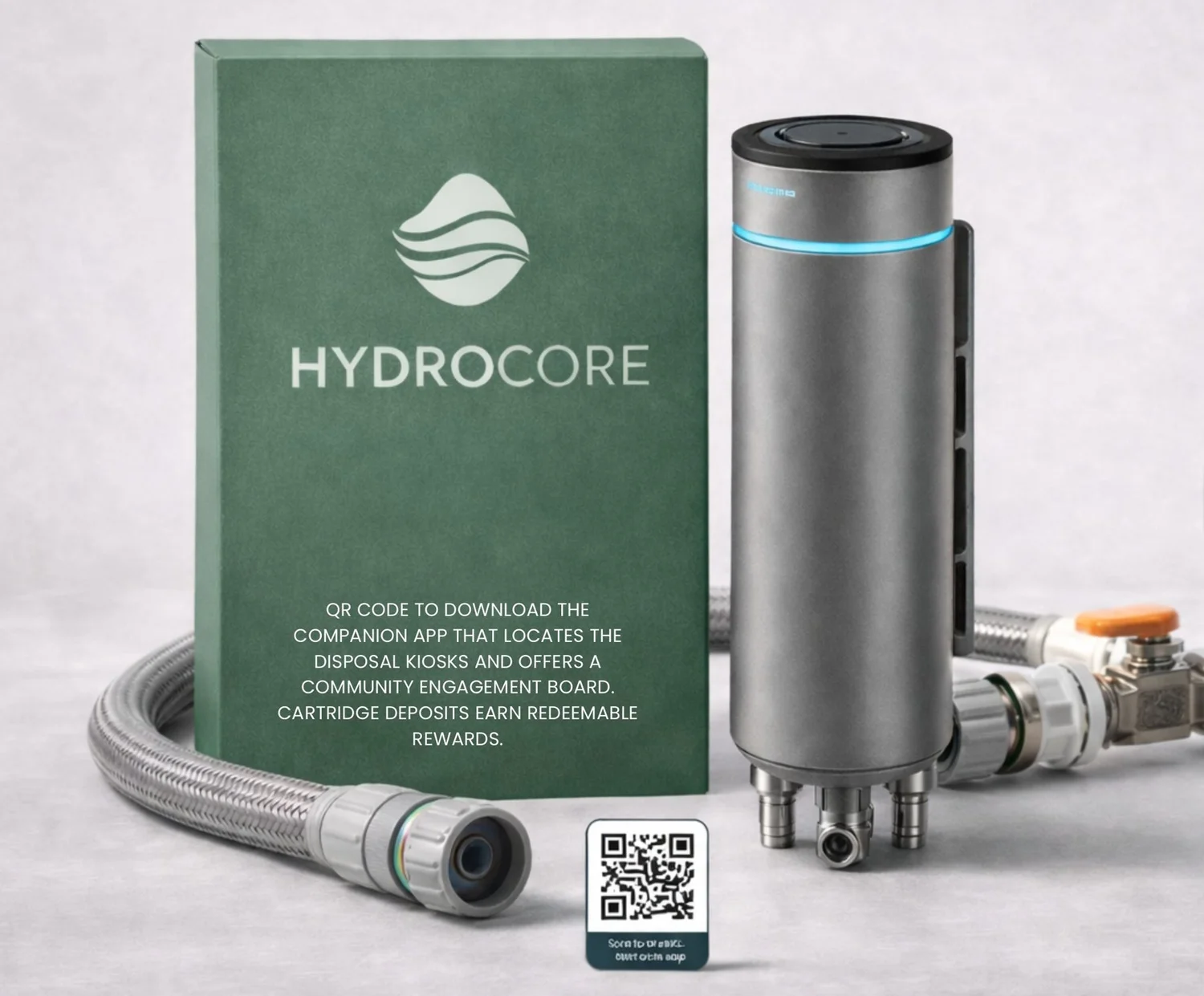
Hydrocore is a modular filter that mounts on a household washing machine and uses an electric field to capture plastic microfibers before they reach the ocean. It's inspired by duckweed's ability to attract particles. A community return system turns the captured fibers into durable building material.

01 · The challenge
Every load of laundry sends plastic toward the ocean
20M
metric tons of plastic waste leaked into the environment in 2020, expected to grow 50% by 2040
35%
of the microplastics in the ocean come from washing synthetic clothes (De Falco et al., 2019)
730,000
fibers can be released into wastewater by a single load of synthetic clothes
Existing filters force a trade-off. Reusable filters tend to be less effective, and single-use filters have no safe way to dispose of what they capture.
02 · Research
Finding the gap in the market
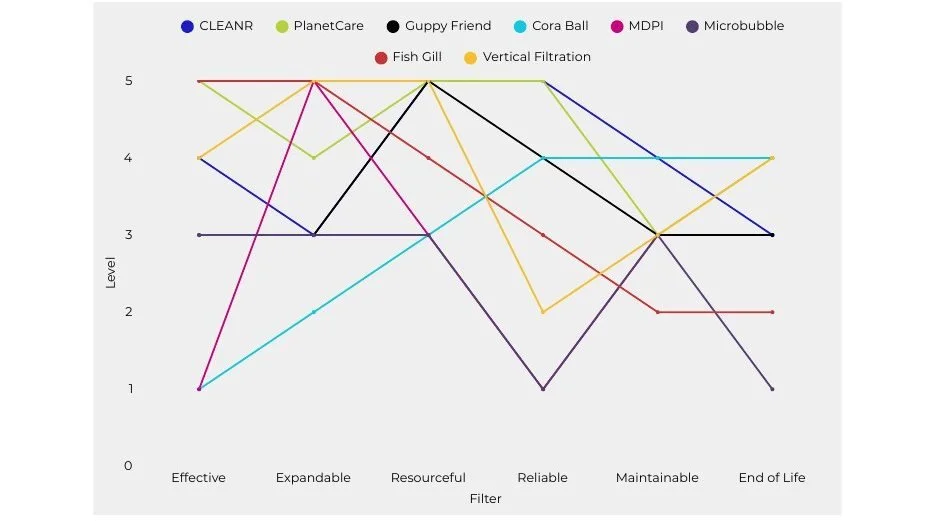
Strategy canvas
We compared eight microfiber filters, including PlanetCare, Guppy Friend, Cora Ball, Filtrol 160 and Samsung's Less Microfiber filter.
None scored well on both capture and end of life. That gap became Hydrocore's focus: an effective filter with a responsible end of life.
Who it's for
Marcus, the Optimizer. A 29-year-old urban renter who wants non-invasive upgrades with measurable impact.
Danielle, the Steward. A 42-year-old suburban homeowner wary of unexpected costs and appliances that feel experimental.

03 · Biological mentor
Learning to filter from duckweed
Duckweed (Lemna minor), the world's smallest flowering plant, traps particles in the water as it floats. We studied how it does it and borrowed one mechanism.
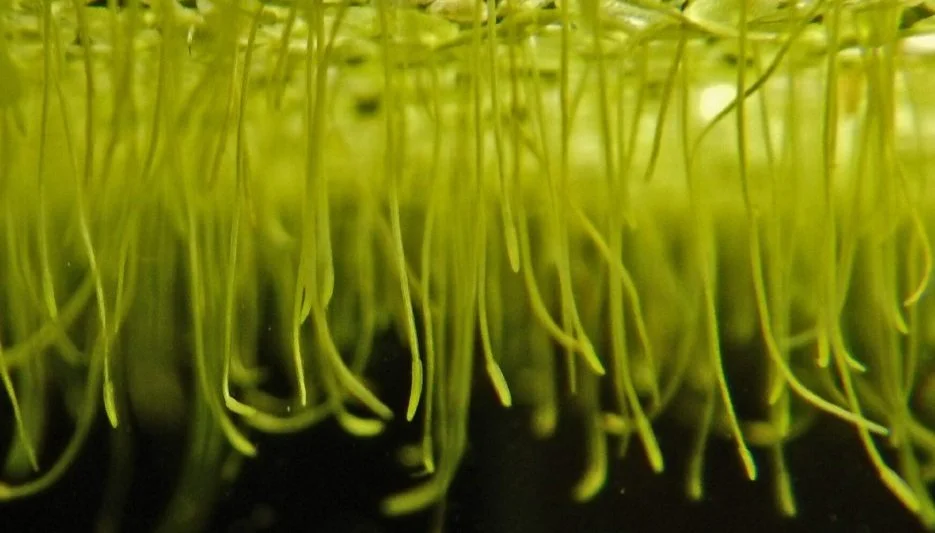
Root texture
Fibrous, finely textured roots catch matter as they drift through the water.
Microscopic biofilm
Bacterial colonies in the roots form a sticky film that particles cling to.
Electrostatic charge
A negative charge attracts positively charged microplastics. This is the principle Hydrocore uses.
04 · Design
Electric-field capture, with no mesh to clog
A central rod powers needle-pin tips that create strong local electric fields. Fibers cling to the needles as gray water passes through, so the filter avoids the clogging and pressure drop of mechanical filters.
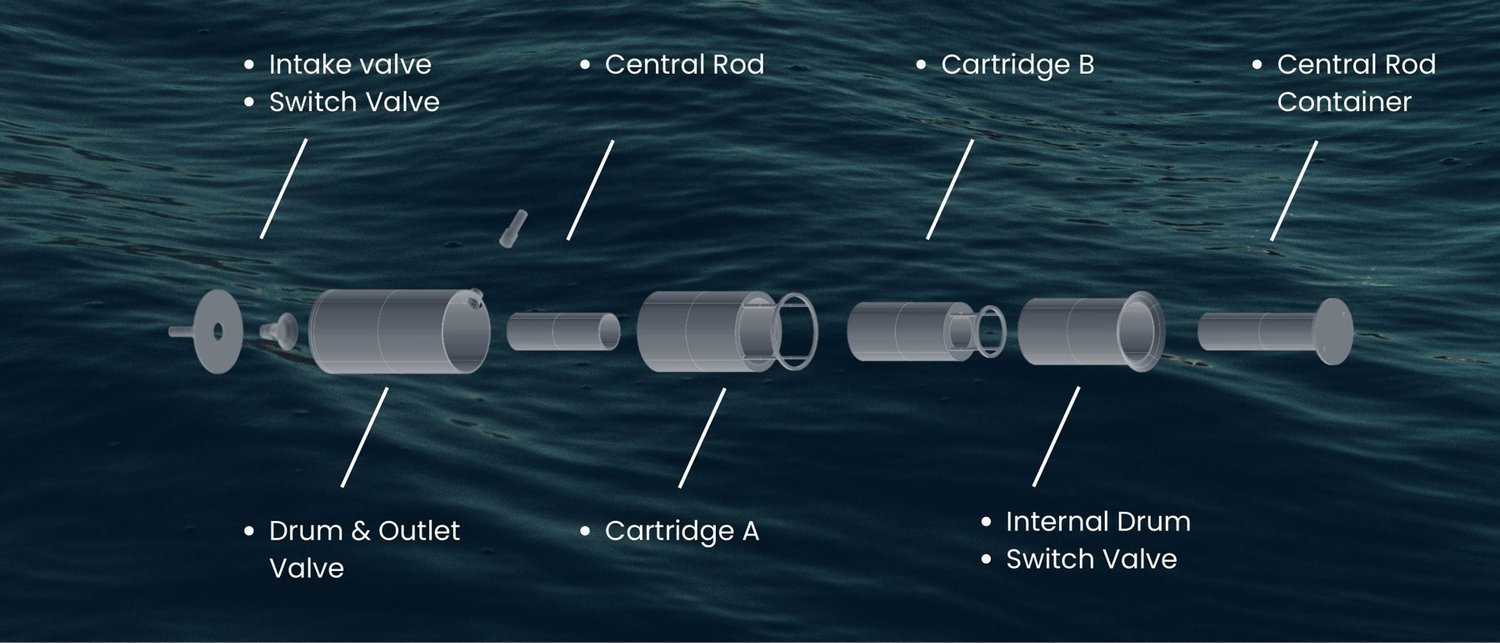
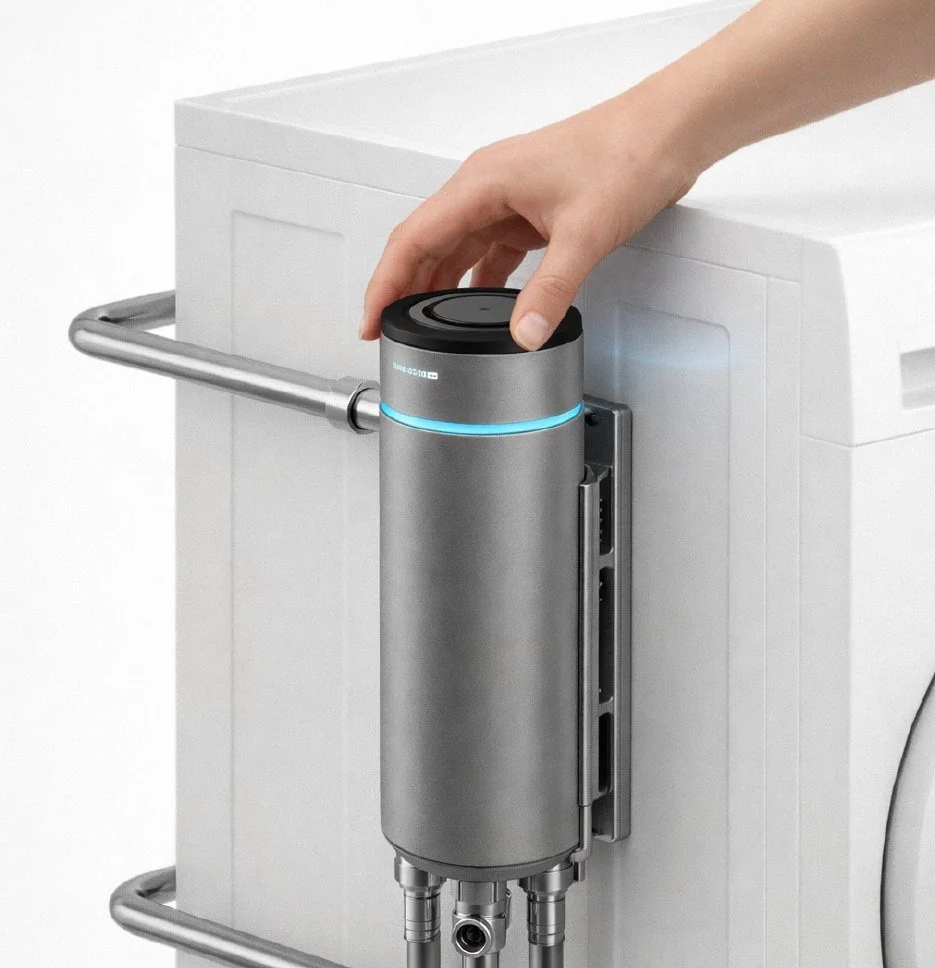
Built to disappear into the routine
Mounts on the back or side of any washer, with no permanent plumbing changes
Twist-in nested cartridges for pick-up-and-go replacement
Intake valve, switch valves and an internal drum keep it filtering continuously
Sized to real household wash loads, following Life's Principle "fit form to function"
05 · The system
A filter is only half the solution
The captured fibers need somewhere to go. Hydrocore works as a product and a service, closing the loop from install to upcycling.
01
Install
The filter attaches without a plumber.
02
Track
A companion app monitors the filter and alerts users when a cartridge is full.
03
Return
Full cartridges go to neighborhood kiosks at coffee shops, grocery stores and gas stations, and earn reward points.
04
Upcycle
Prospective partner Gjenge Makers turns the fibers into plastic-composite bricks for community infrastructure.
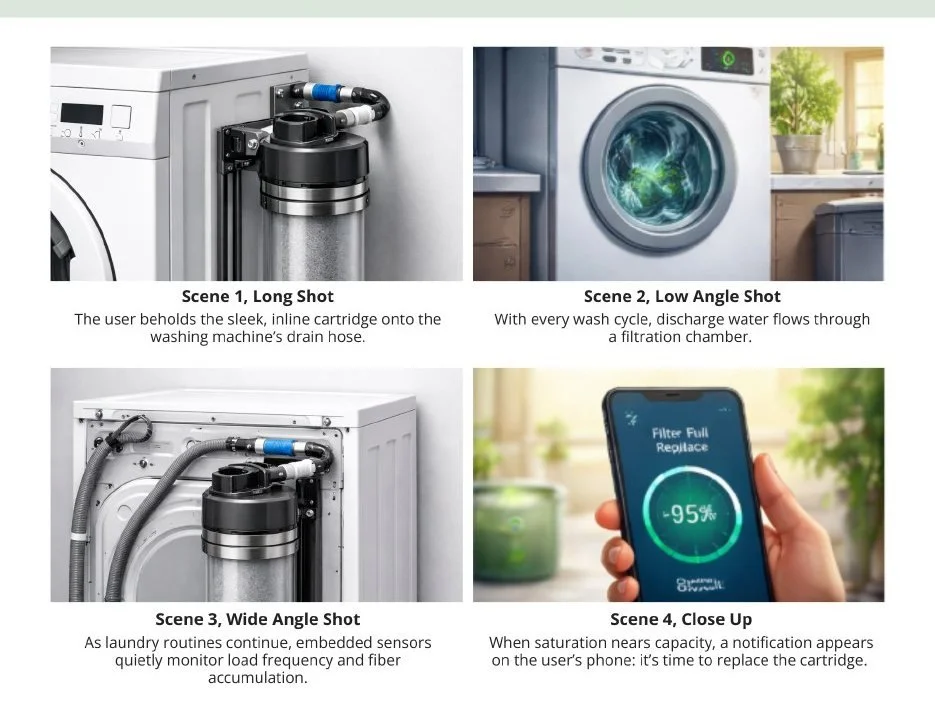
Storyboard: from installation to the app's “replace cartridge” alert
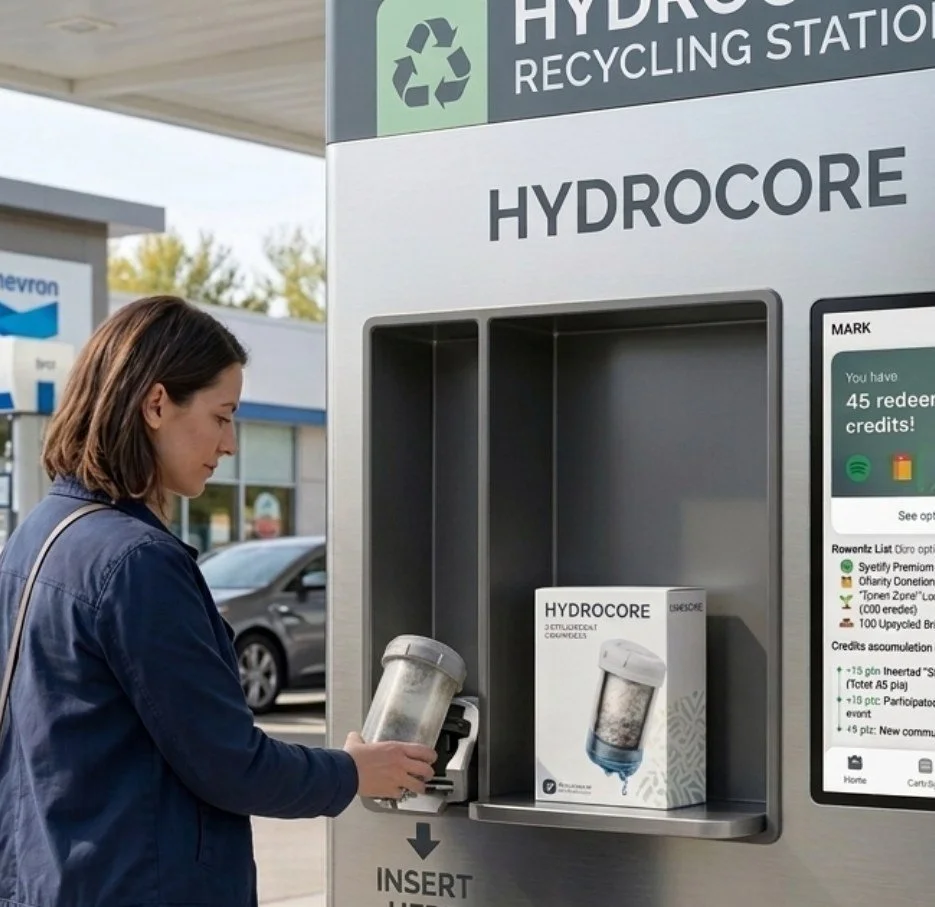
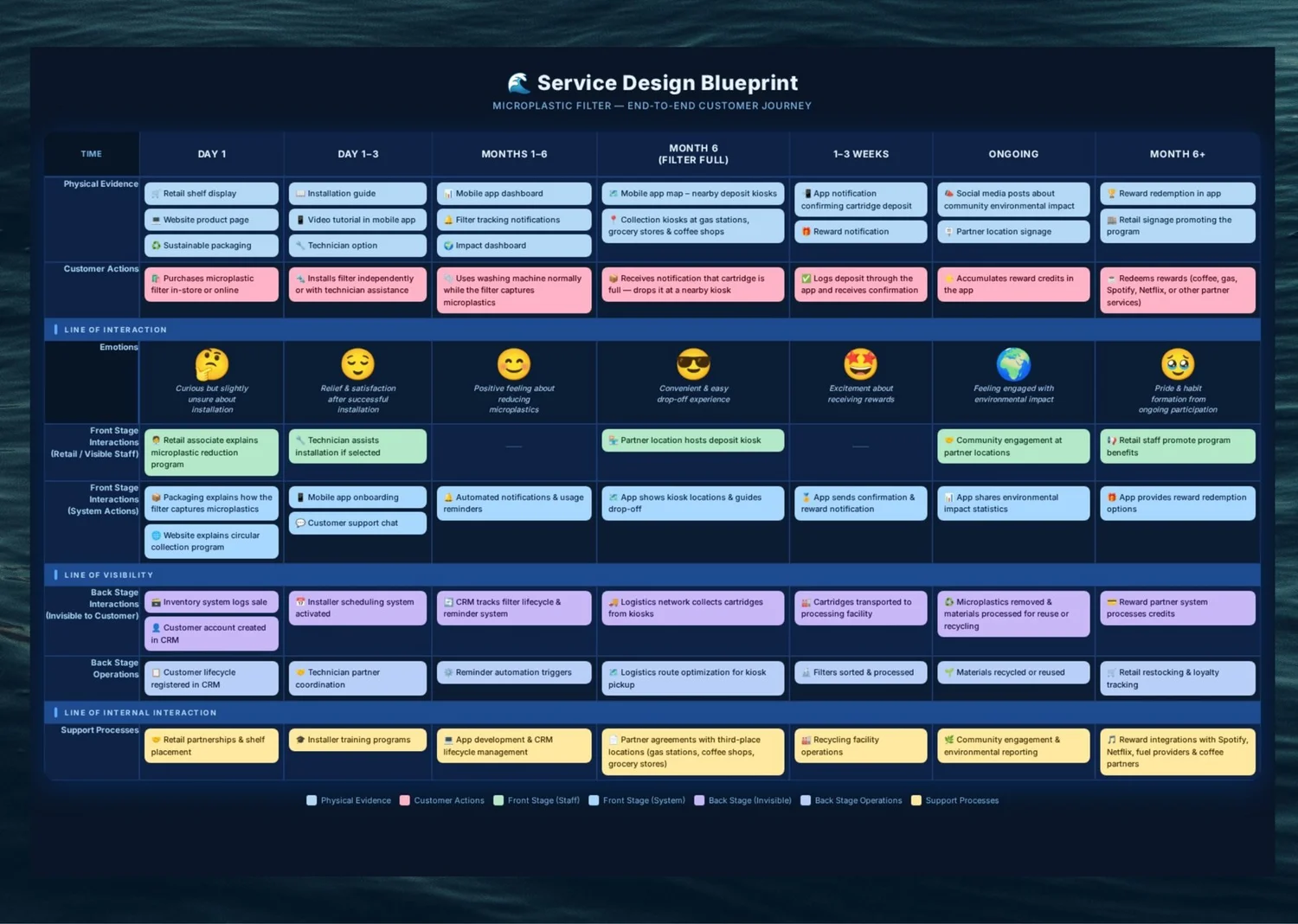
The service blueprint maps every touchpoint, from installation to cartridge replacement and disposal, along with the back-stage logistics that support it.
06 · Behavior change
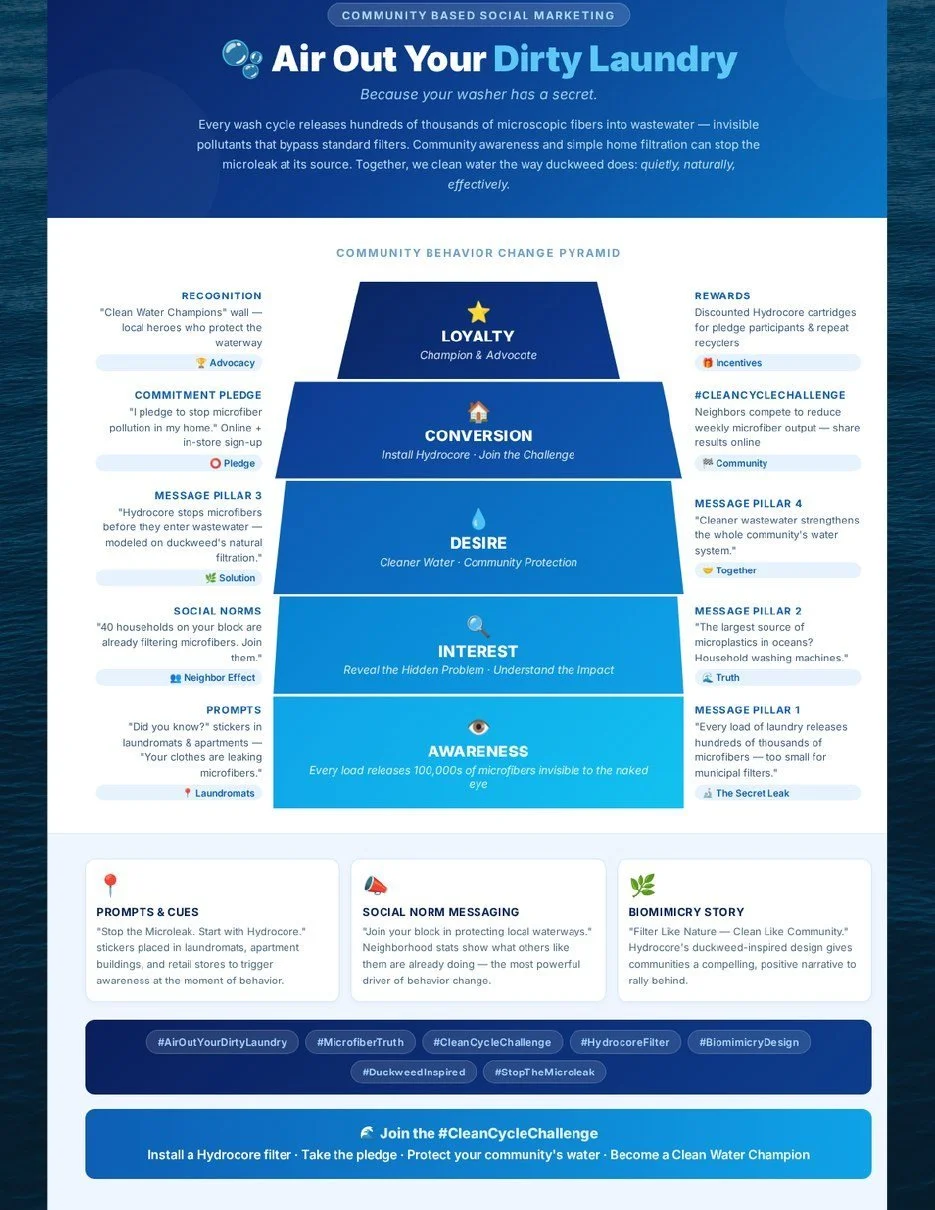
“Your washer has a secret”
A community-based social marketing plan makes taking part easy, visible and social. It's built around the #CleanCycleChallenge.
Neighborhood kiosks, app rewards and local impact displays show how much microfiber each community has kept out of the water. The Community Change Pyramid moves people from awareness to loyalty.
07 · Impact and alignment
Built to report against
UN SDGs
6.3 Improve water quality by reducing pollution
12.4 Environmentally sound management of waste
14.1 Reduce marine pollution from land-based activities
17.17 Promote effective partnerships
GRI
306 Waste
303 Water and effluents
301-2 Recycled input materials
SASB
CG-AM-410a.1 Product lifecycle impacts
RT-CH-410b.2 Reduced environmental impact
IF-WM-420a.2 Recovery and reuse of waste
Room to scale
The same modular platform could extend to other household appliances and to laundromats, building a network that intercepts microplastics at the source.